Description
Graeme McRae stands among New Zealand’s most accomplished and influential racing drivers, a remarkable competitor whose achievements deserve far greater recognition in the history of international motorsport. Born in Wellington in 1940, McRae belonged to an extraordinary generation of New Zealand drivers who established themselves on the world racing stage through determination, engineering ingenuity and exceptional driving ability. A fiercely competitive individual, McRae was not simply a talented driver but also an accomplished racing car designer and constructor, developing his own formidable single-seater racing machines and competing successfully against some of the biggest names in international motorsport.
McRae’s greatest achievements came during the golden era of Formula 5000 racing, when these spectacular, high-powered single-seaters attracted some of the world’s finest drivers. He won three consecutive Tasman Series championships between 1971 and 1973, an extraordinary accomplishment that firmly established him among the leading competitors of his generation. His success extended beyond Australasia, including victory in the 1972 British Formula 5000 Championship, demonstrating his ability to compete and win internationally. His racing career also included an appearance in the 1973 Indianapolis 500, where he earned Rookie of the Year honours, further highlighting the versatility and determination of this remarkable New Zealand motorsport personality.
Yet despite these considerable achievements, Graeme McRae’s contribution to New Zealand’s motorsport heritage has arguably never received the widespread recognition it deserves. Alongside celebrated names such as Bruce McLaren, Denny Hulme and Chris Amon, McRae helped establish New Zealand’s reputation as a country capable of producing world-class racing talent, engineering expertise and competitive machinery. His legacy extends beyond race victories and championship titles to the remarkable McRae racing cars that carried his name, representing an important chapter in our country’s engineering and sporting history. Today, surviving McRae competition cars are significant pieces of New Zealand’s motorsport heritage, deserving of careful preservation, documentation and appreciation by present and future generations.
Specifications
About this Vehicle
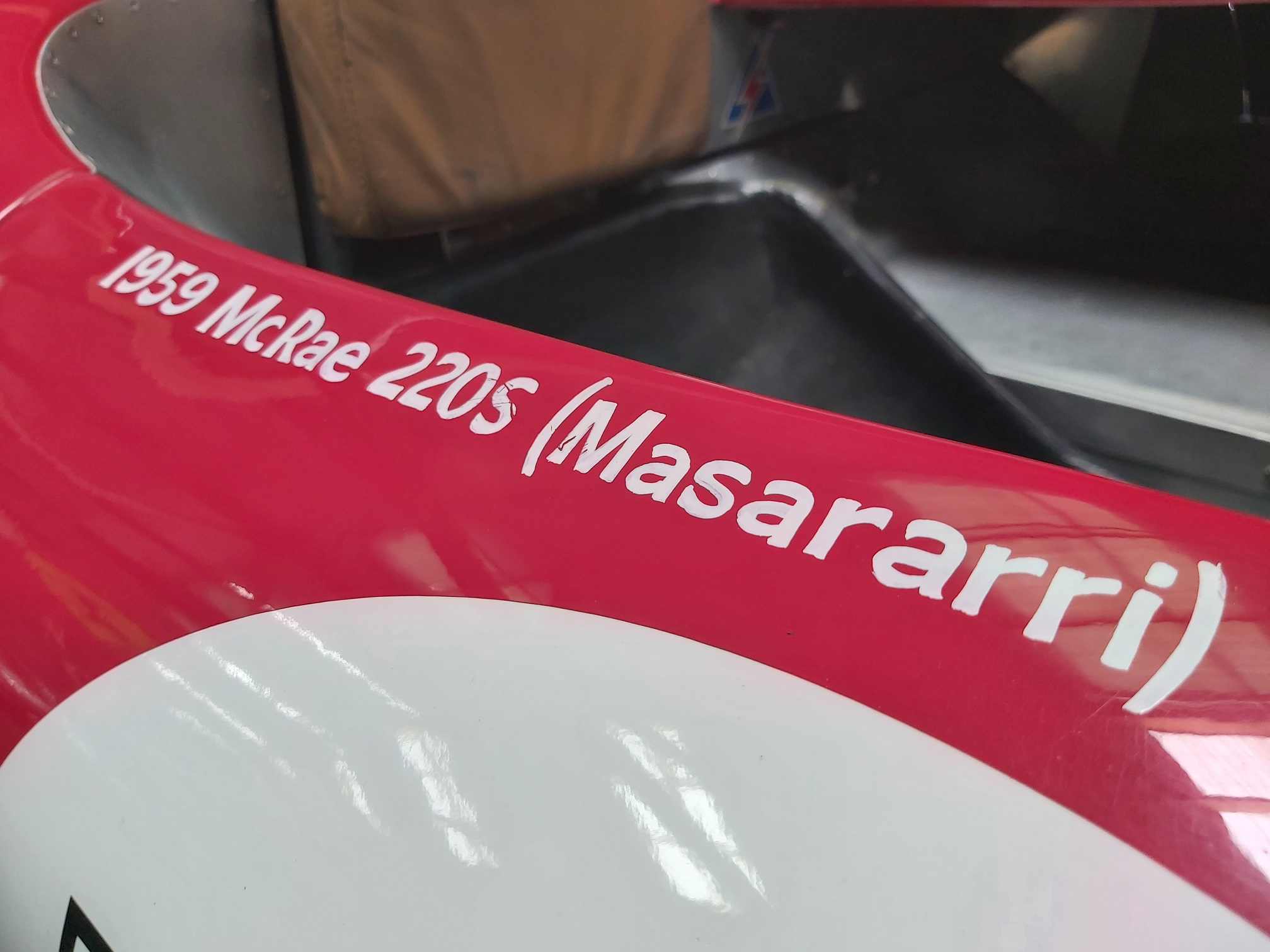
THE MASARARRI – GRAEME McRAE’S FIRST RACING CAR
AN EXTRAORDINARY PIECE OF NEW ZEALAND MOTORSPORT HISTORY
A UNIQUE OPPORTUNITY TO ACQUIRE THE RACING CAR THAT STARTED THE REMARKABLE CAREER OF ONE OF NEW ZEALAND’S GREATEST DRIVERS AND CONSTRUCTORS.
Graeme McRae was one of New Zealand’s most accomplished and gifted racing drivers, designers and constructors. A fiercely competitive individual with exceptional engineering ability, McRae went on to achieve extraordinary success in international motorsport, particularly during the golden era of Formula 5000 racing. Remarkably, many of his greatest achievements came behind the wheel of racing cars bearing his own name, machines he had designed and developed himself. His talent extended well beyond driving, combining mechanical ingenuity, determination and an instinctive understanding of what made a racing car competitive.
Born on 5 March 1940 in Petone, Wellington, McRae attended Rongotai College and Wellington Technical College before beginning an apprenticeship at his father’s engineering business at just fifteen years of age. His fascination with motorsport developed after attending a race meeting at Levin when he was seventeen. Influenced by the engineering and graceful lines of legendary Second World War aircraft, including the P-51 Mustang and Supermarine Spitfire, McRae developed an appreciation for both mechanical performance and purposeful design. By 1961, he had completed his engineering studies and was already developing the skills that would eventually establish him as one of New Zealand’s most respected racing car constructors.
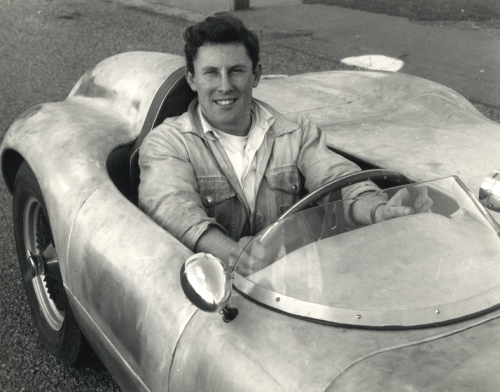
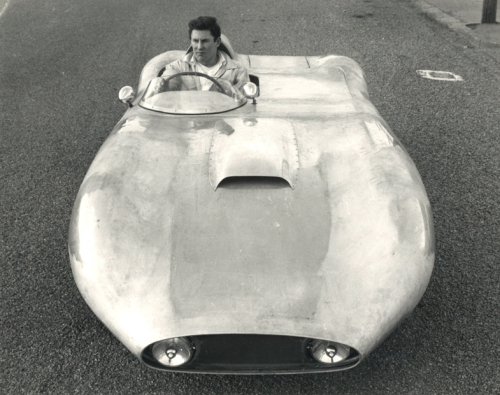
At approximately twenty years of age, McRae embarked upon an ambitious project that would mark the beginning of his extraordinary motorsport career. Working with limited resources but considerable imagination and determination, he constructed his first sports racing car, the remarkable Masararri. Designed for road use, hill climbs, sprints and circuit racing, this extraordinary machine embodied the resourcefulness and ingenuity of a young New Zealand engineer who would eventually compete against some of the greatest names in world motorsport.
THE MASARARRI – DESIGN, ENGINEERING & CONSTRUCTION
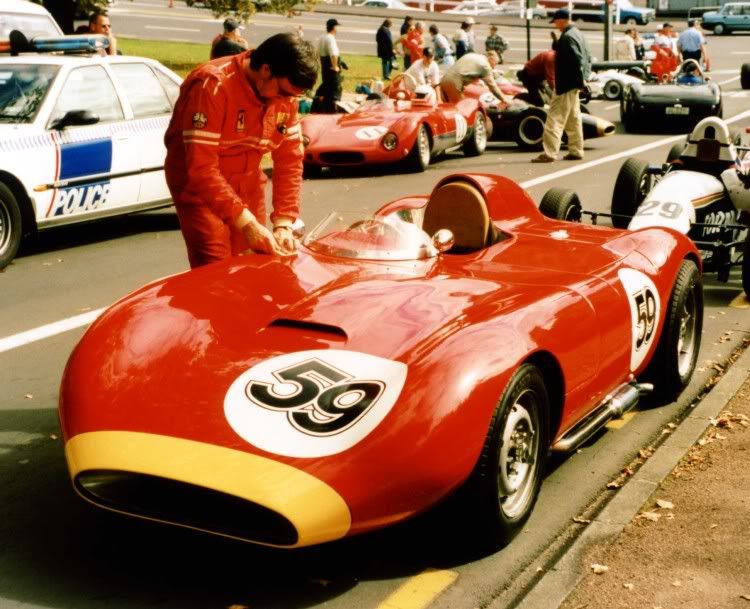
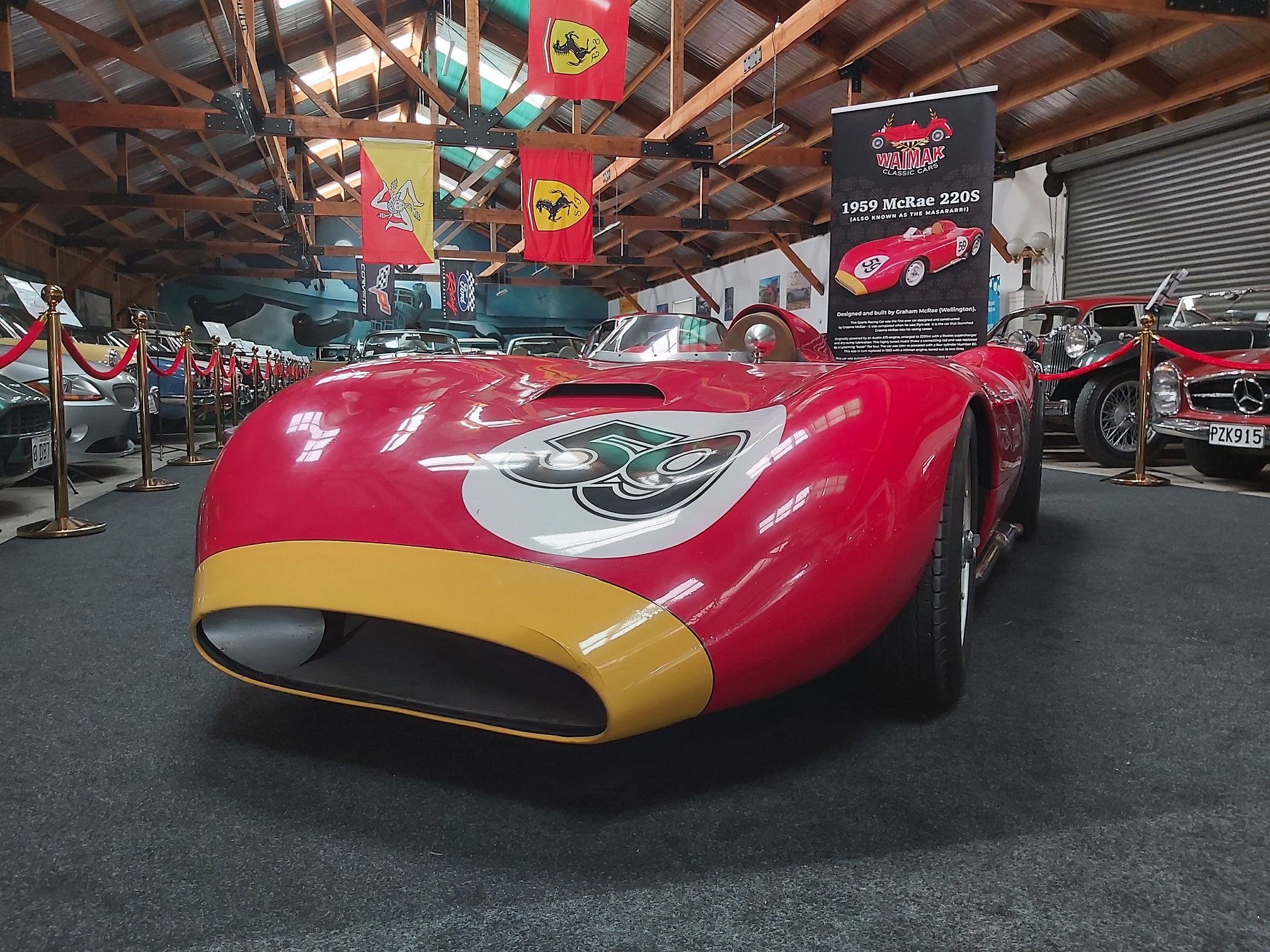
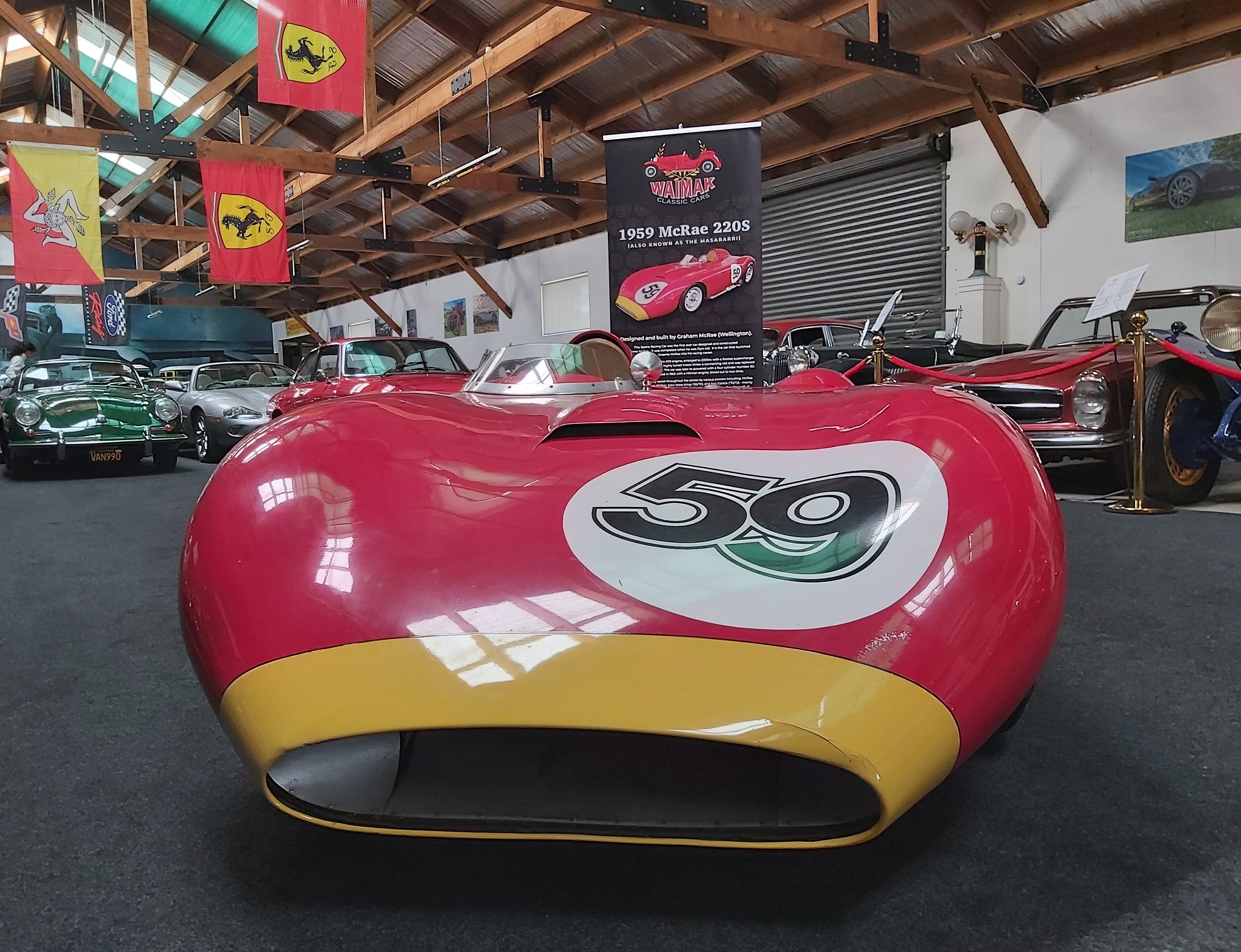
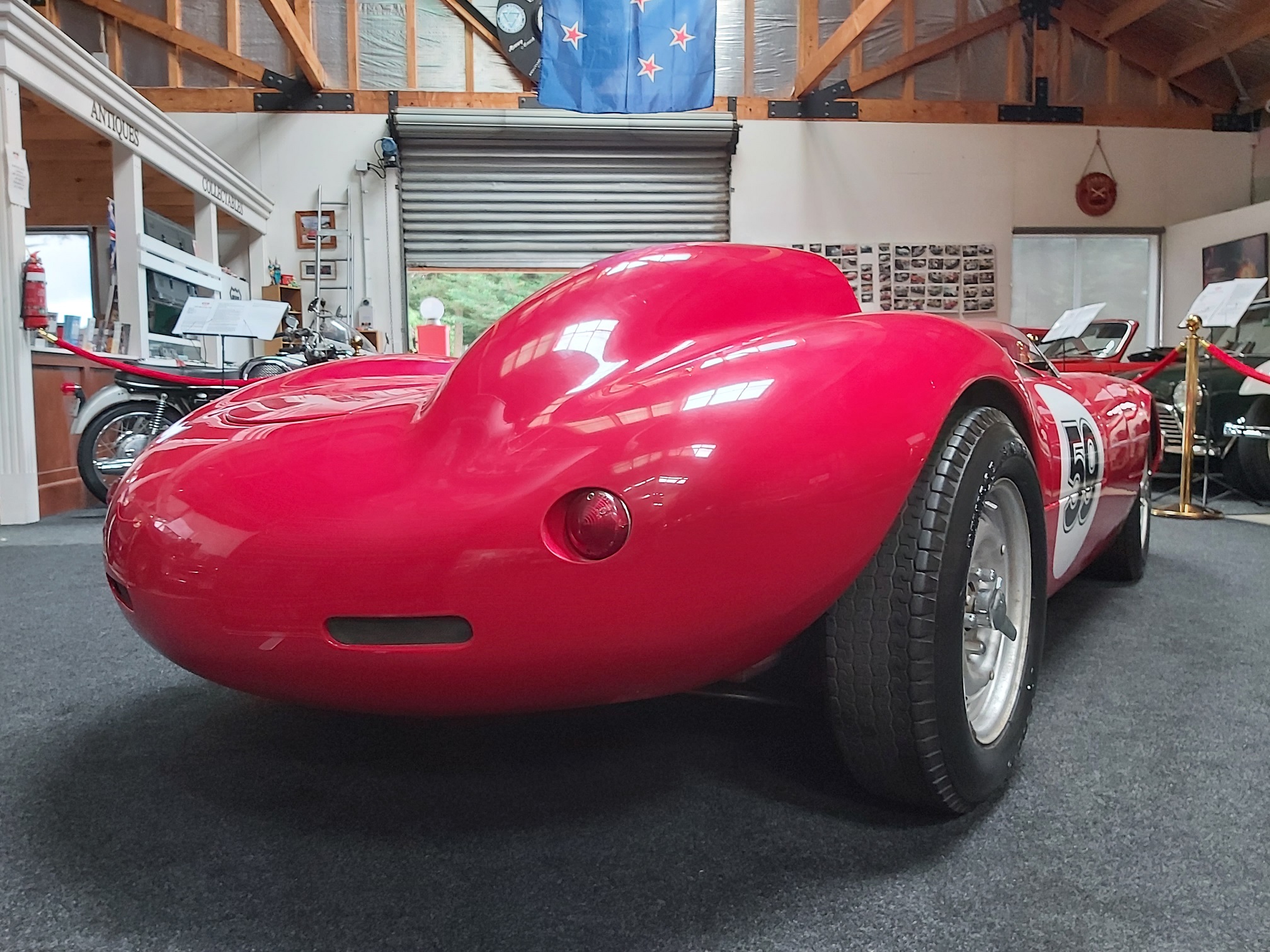
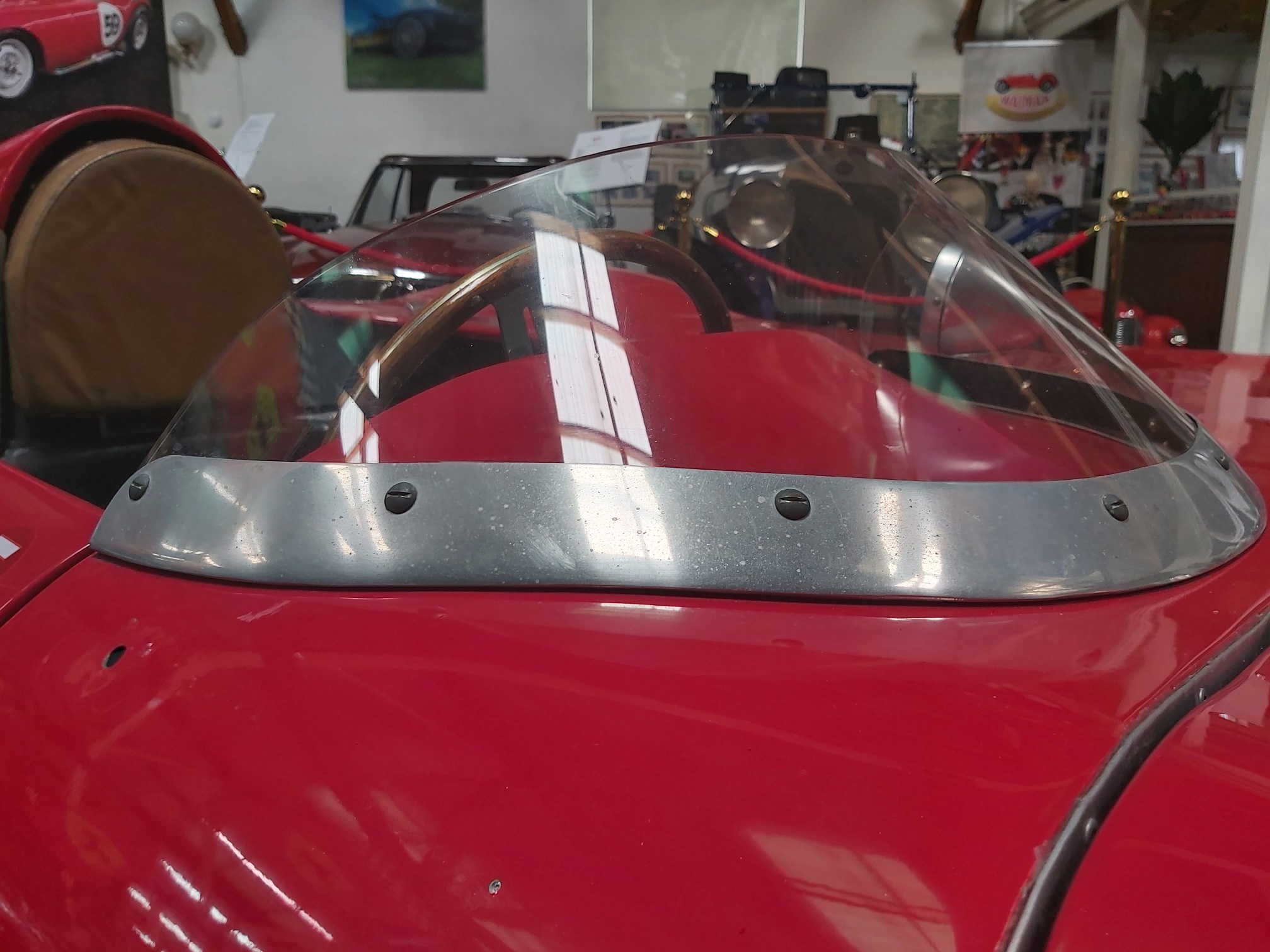
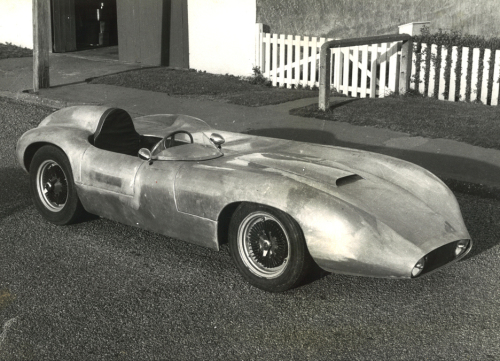
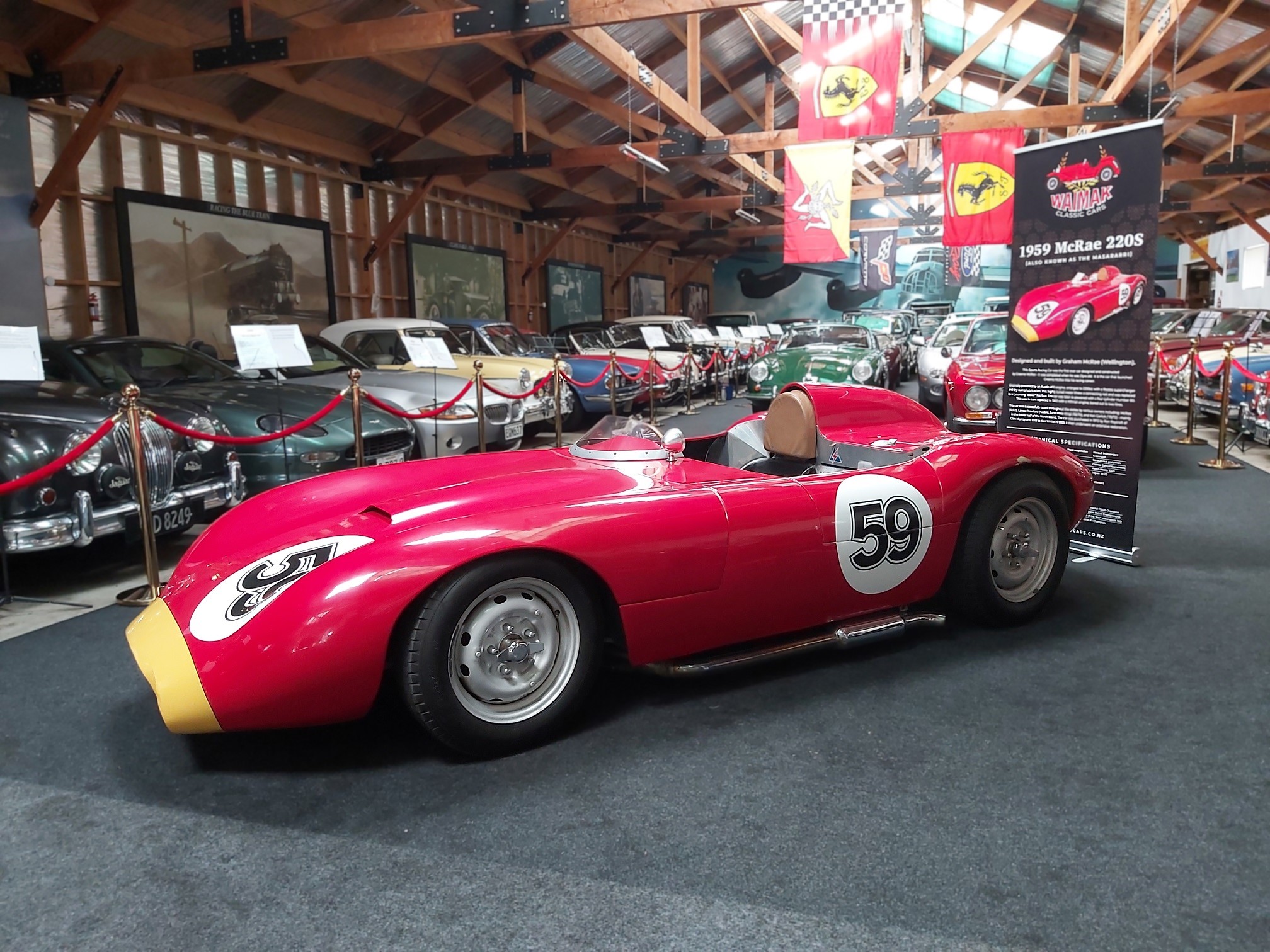
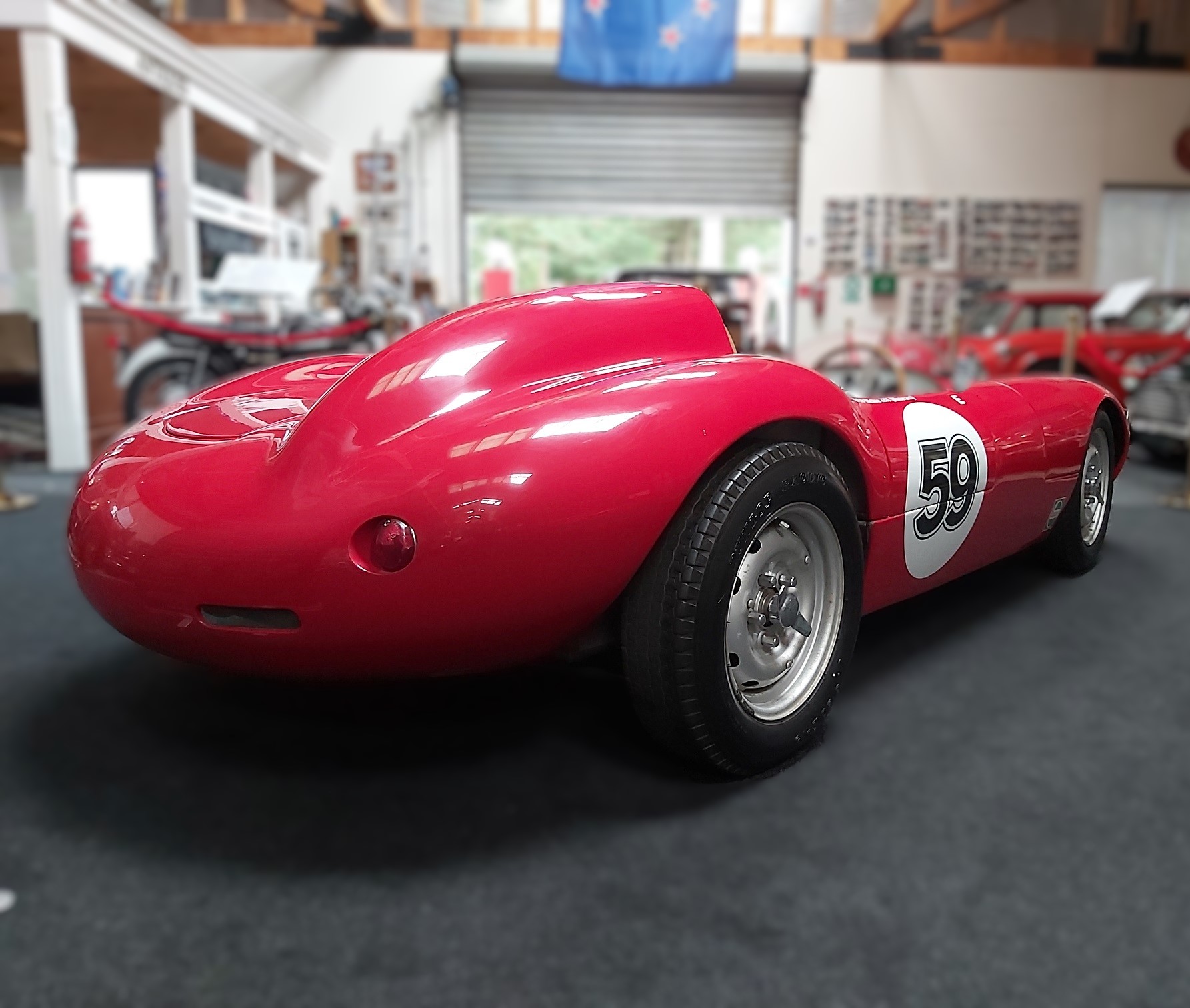
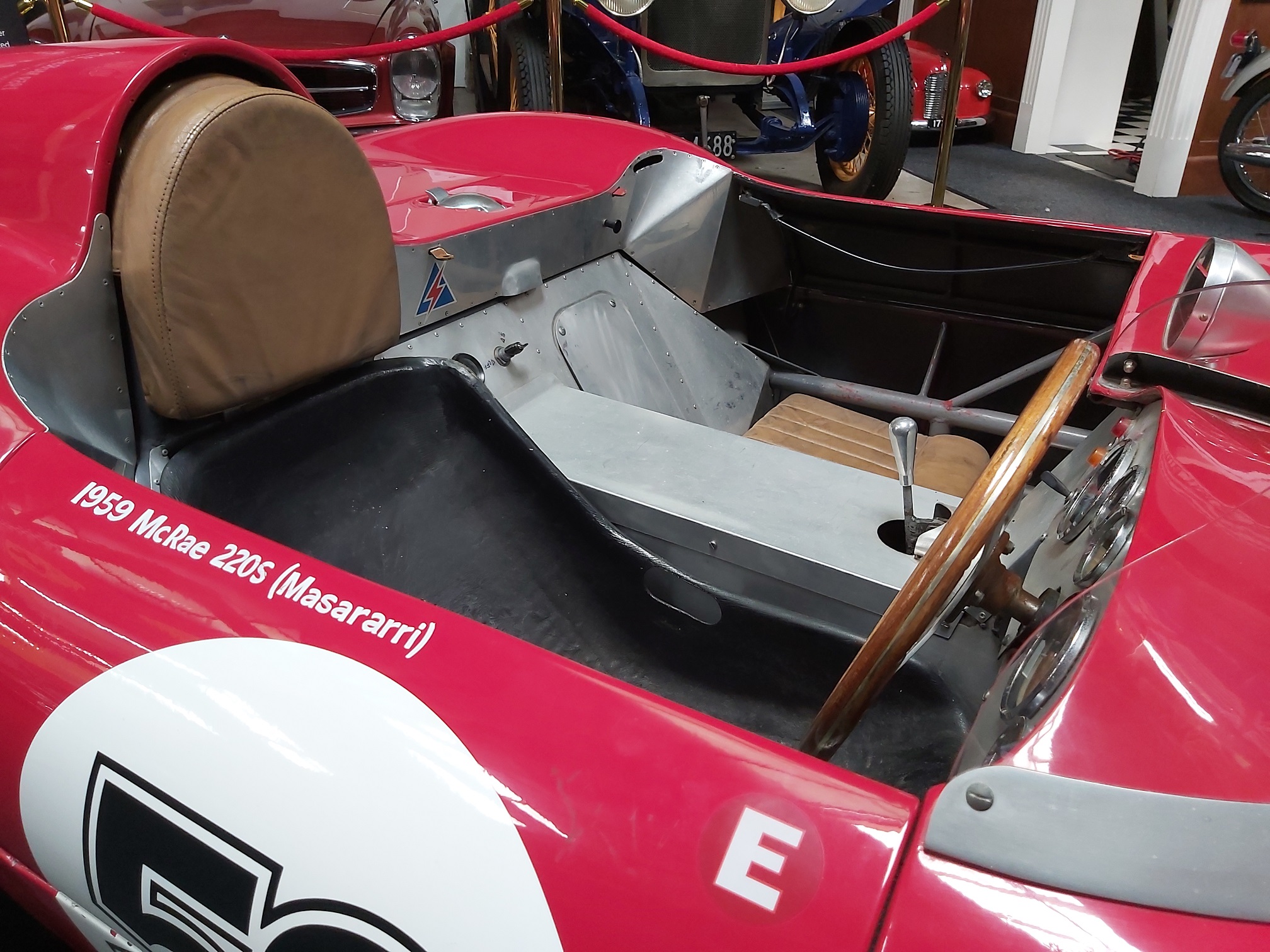
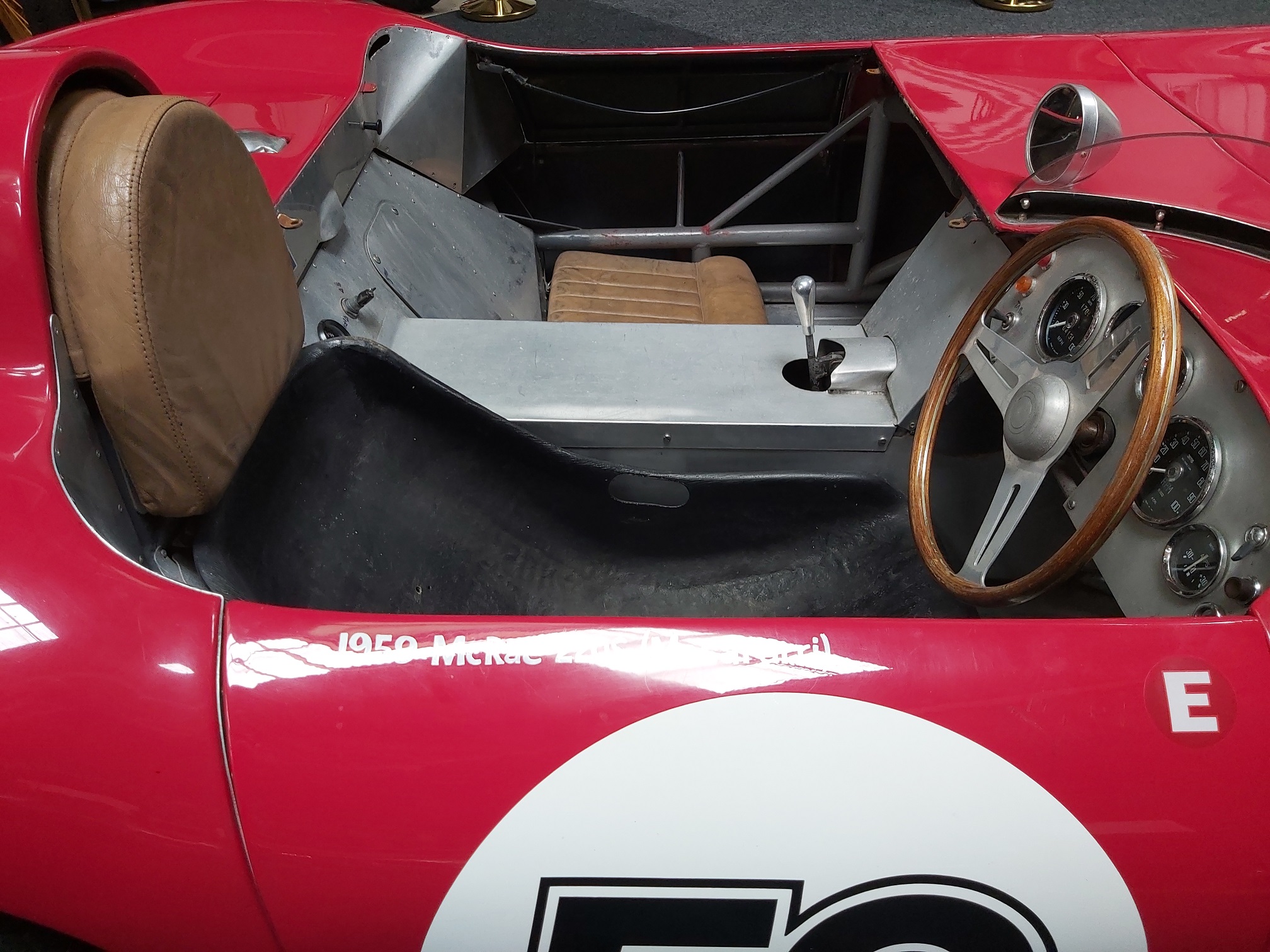
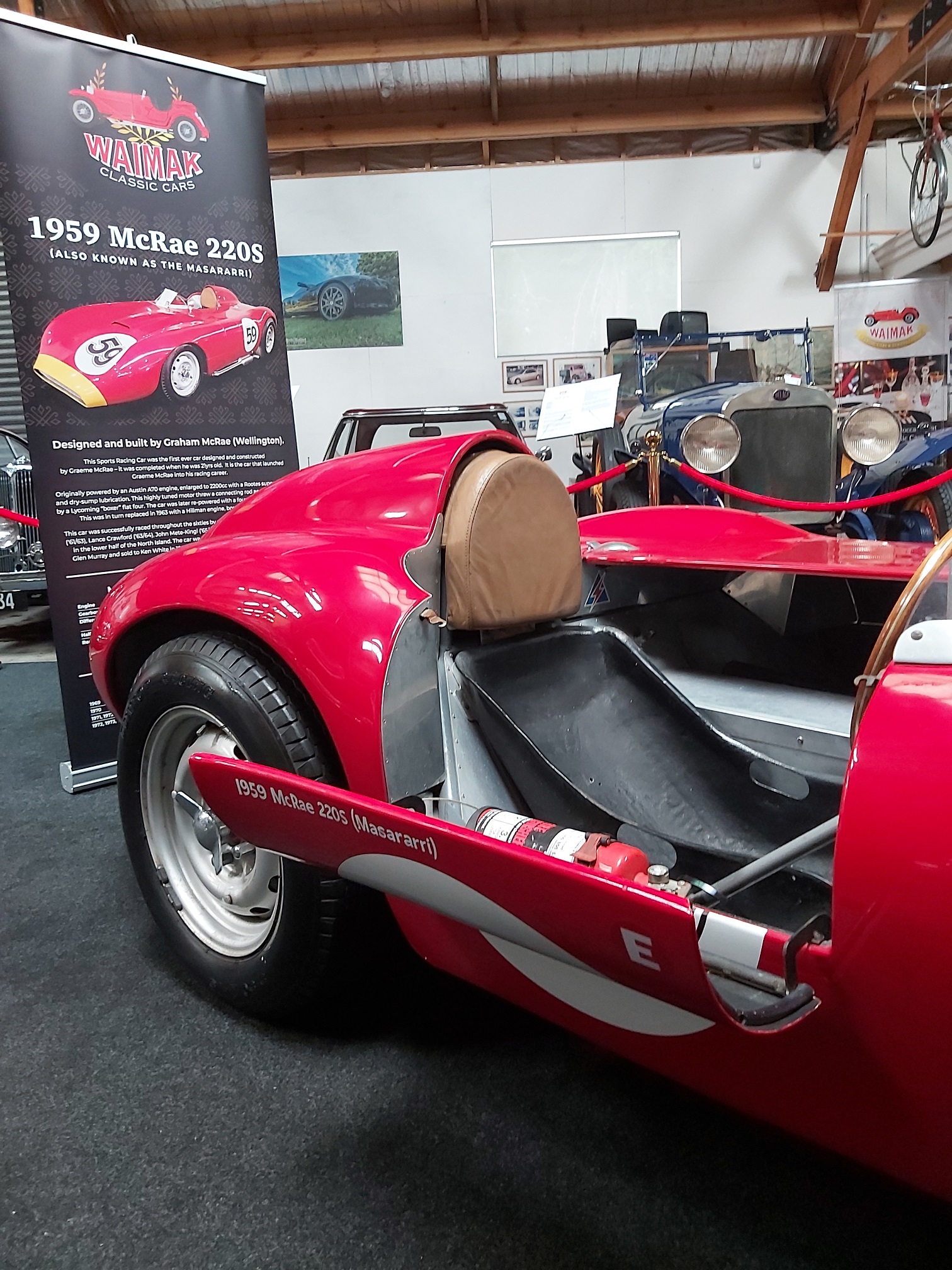
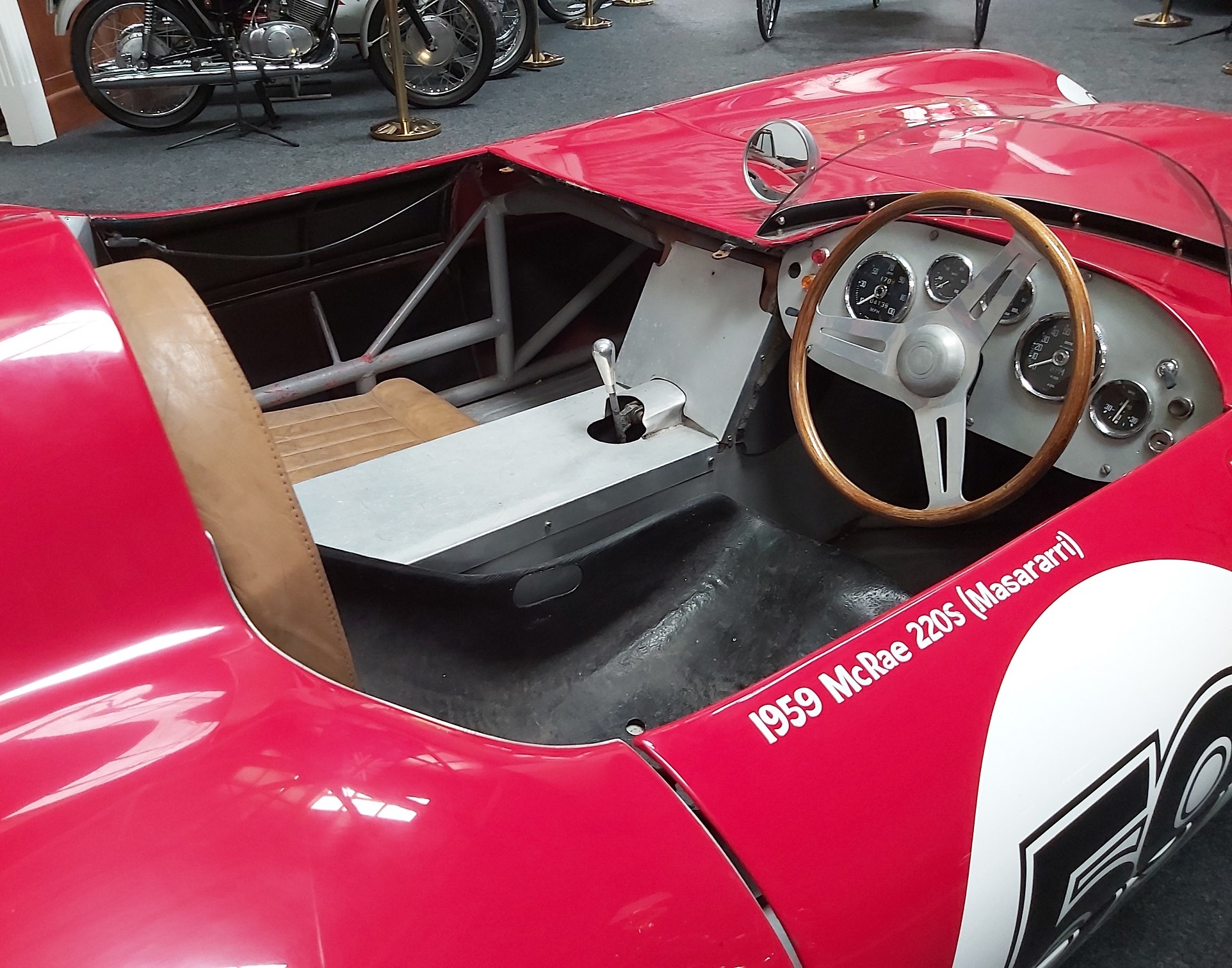
The Masararri featured striking hand-crafted aluminium coachwork created by Wellington artisan Jack Patterson. Its beautifully proportioned sporting body incorporated styling influences from two of the most celebrated European racing sports cars of the period, the Ferrari 250 Testa Rossa and Maserati 300S. The result was an elegant yet purposeful competition machine, combining European-inspired styling with distinctly New Zealand engineering ingenuity.
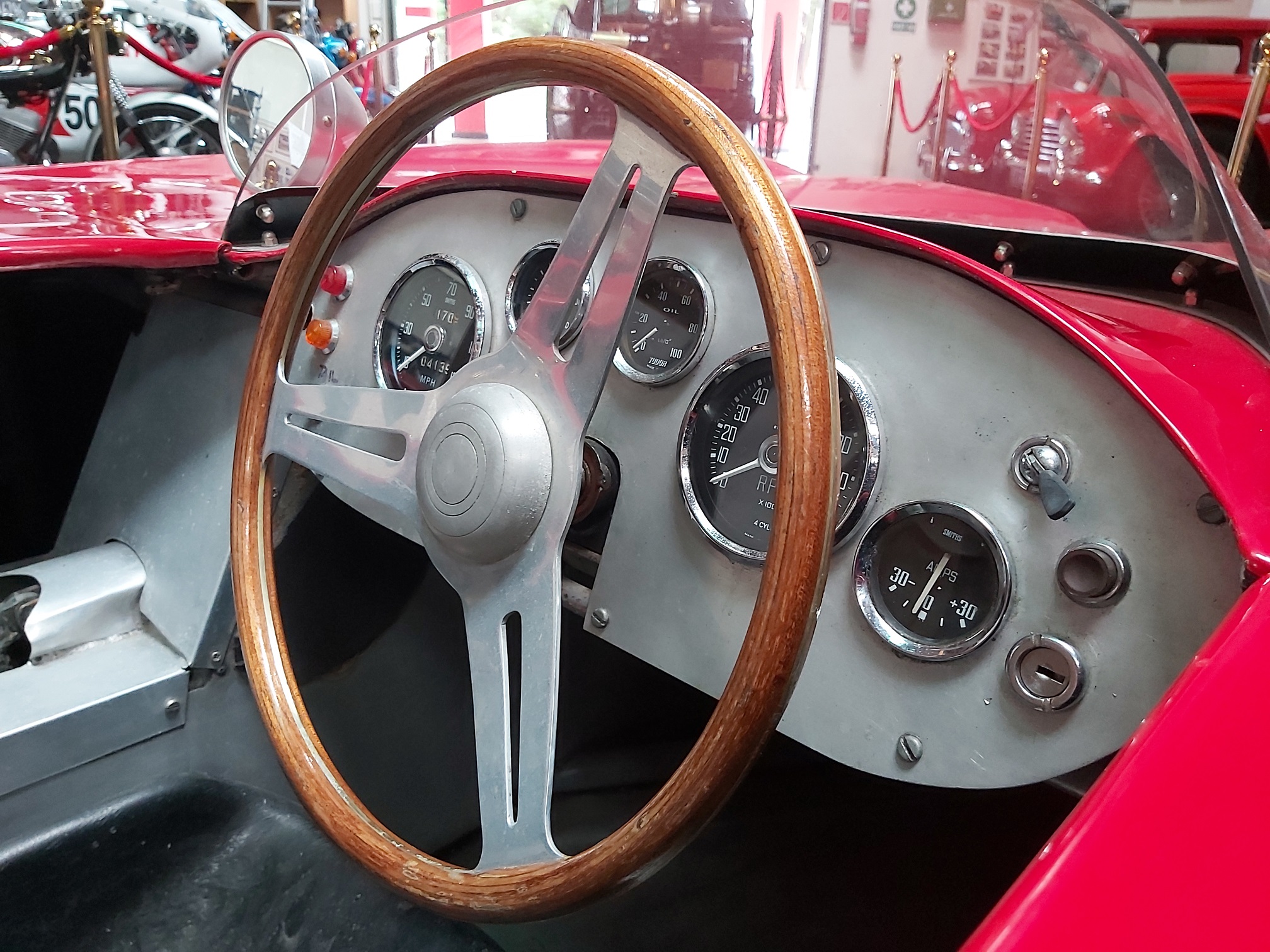
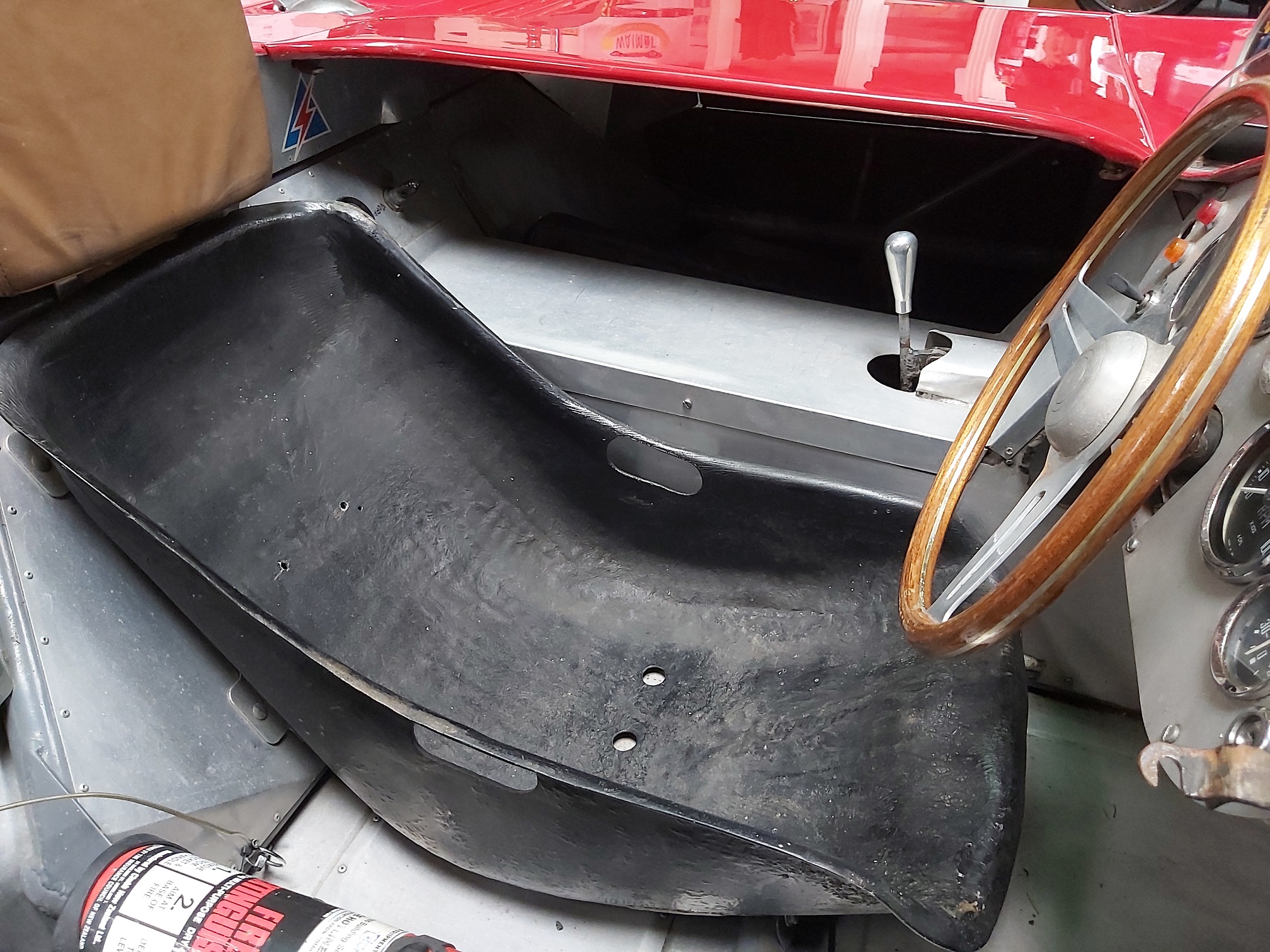
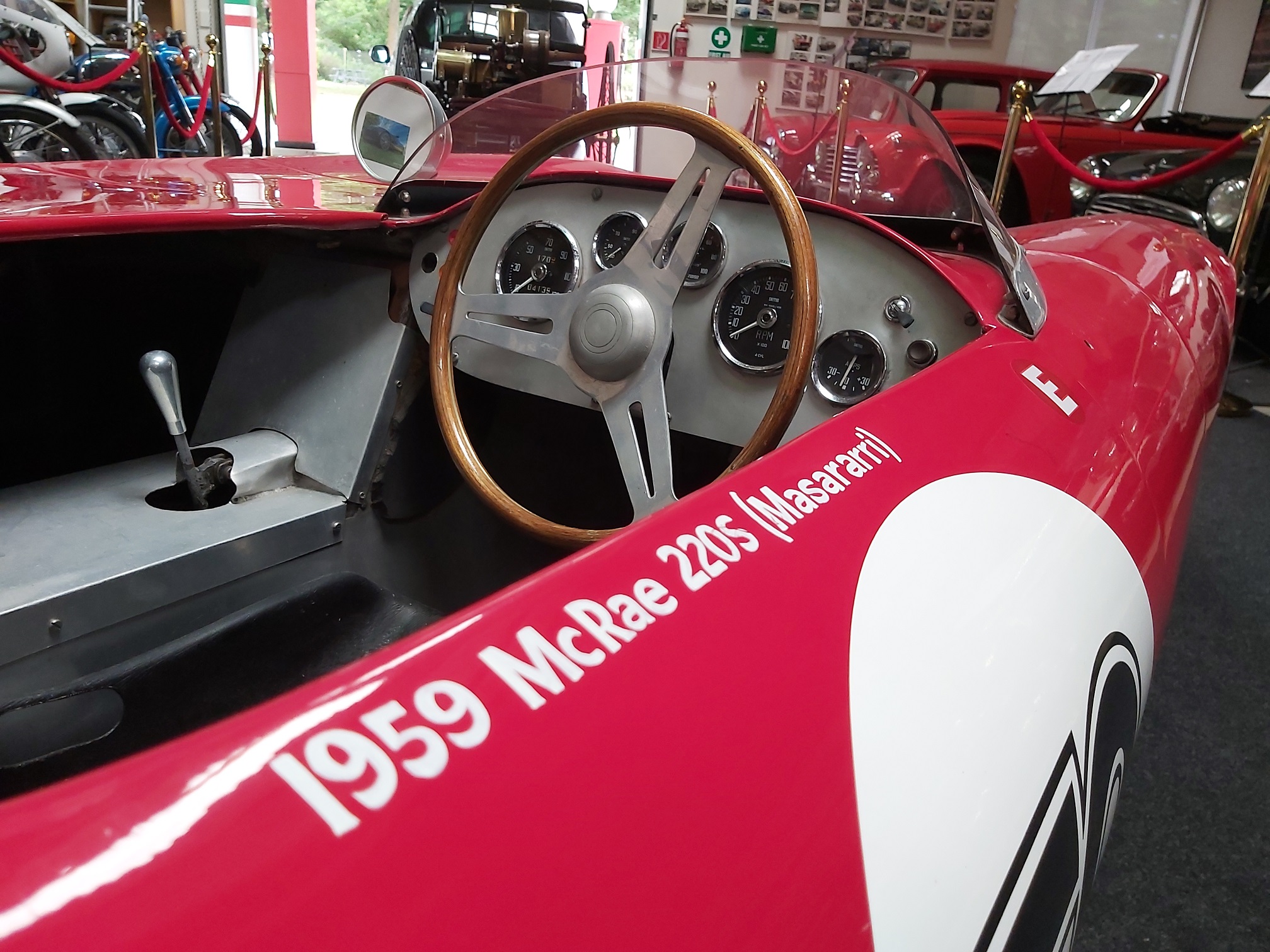
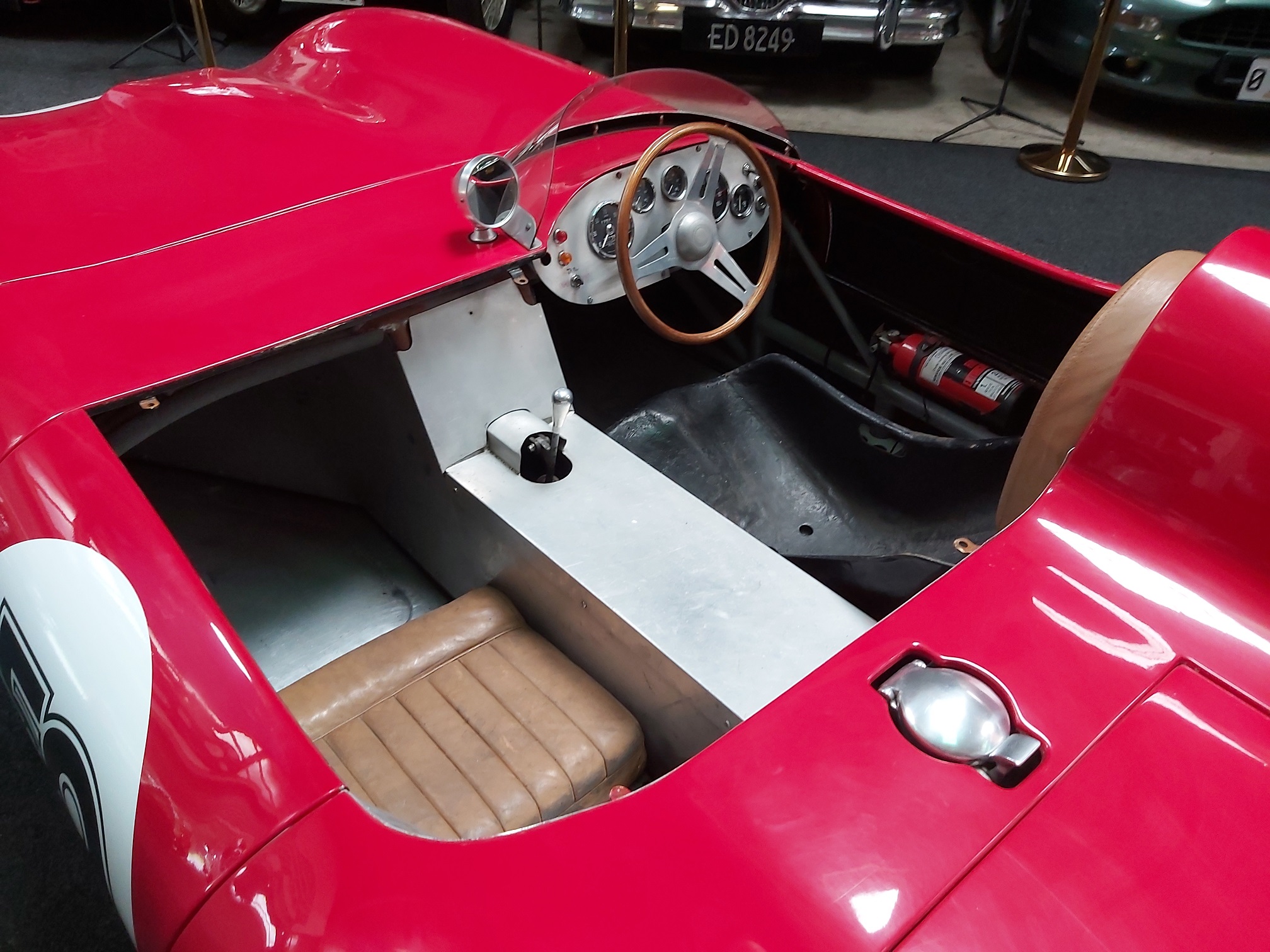
Beneath the aluminium bodywork was a tubular space-frame chassis incorporating a fascinating combination of mechanical components sourced from several manufacturers. Rather than relying upon an established design, McRae engineered a considerable portion of the car himself, demonstrating the mechanical understanding and creativity that would become hallmarks of his later racing career.
ENGINEERING & MECHANICAL HIGHLIGHTS
- Designer and constructor: Graeme McRae, Wellington, New Zealand.
- Coachwork: Hand-crafted aluminium body by Wellington craftsman Jack Patterson.
- Styling: Inspired by the Ferrari 250 Testa Rossa and Maserati 300S.
- Chassis: Purpose-built tubular space-frame construction.
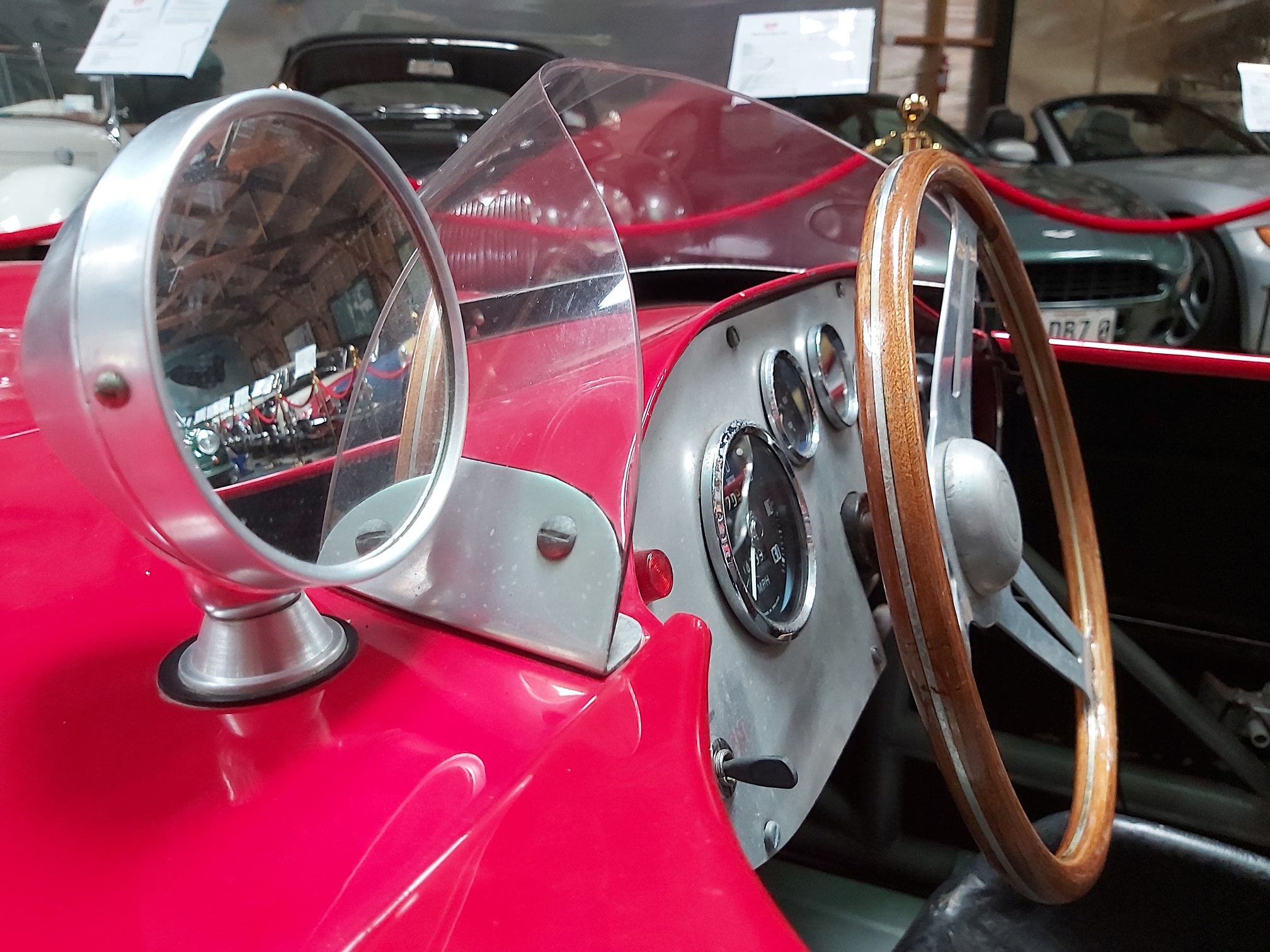
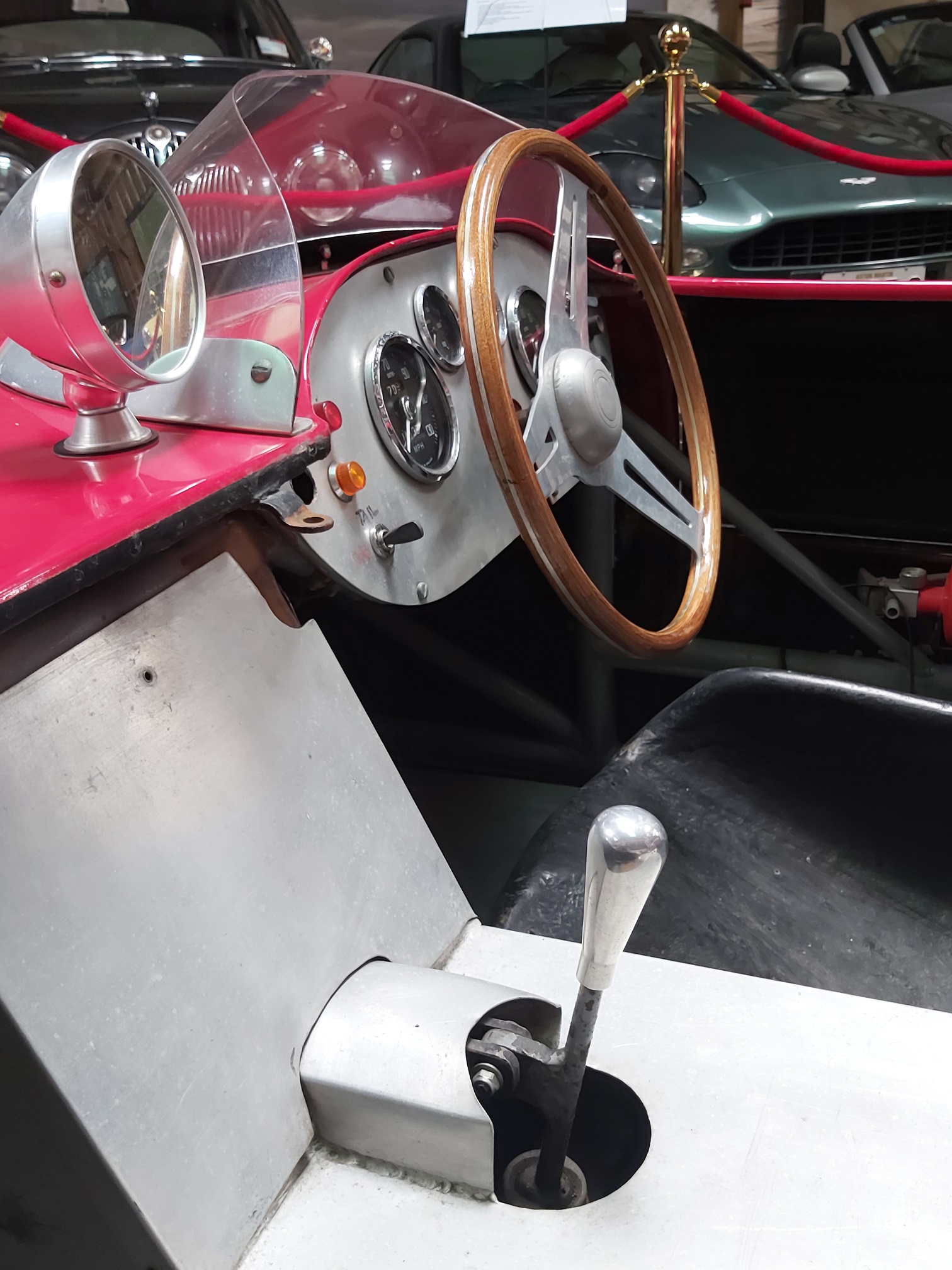
- Steering: Renault components.
- Front suspension: Renault-derived arrangement.
- Rear suspension: McRae’s own design, incorporating unequal-length wishbones and helical coil springs.
- Half shafts: Citroën components.
- Differential: Ford Model A.
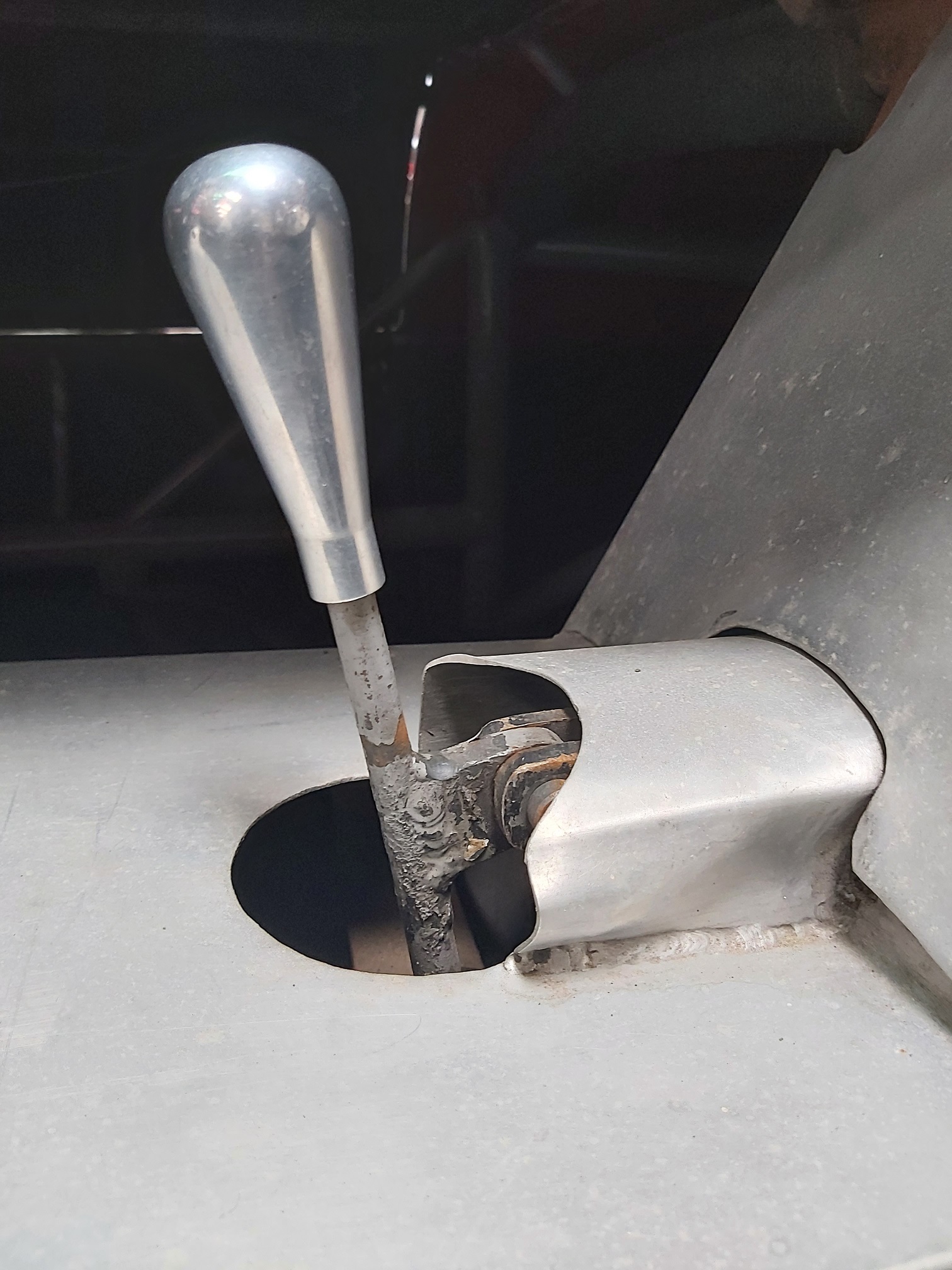
- Gearbox: Jaguar.
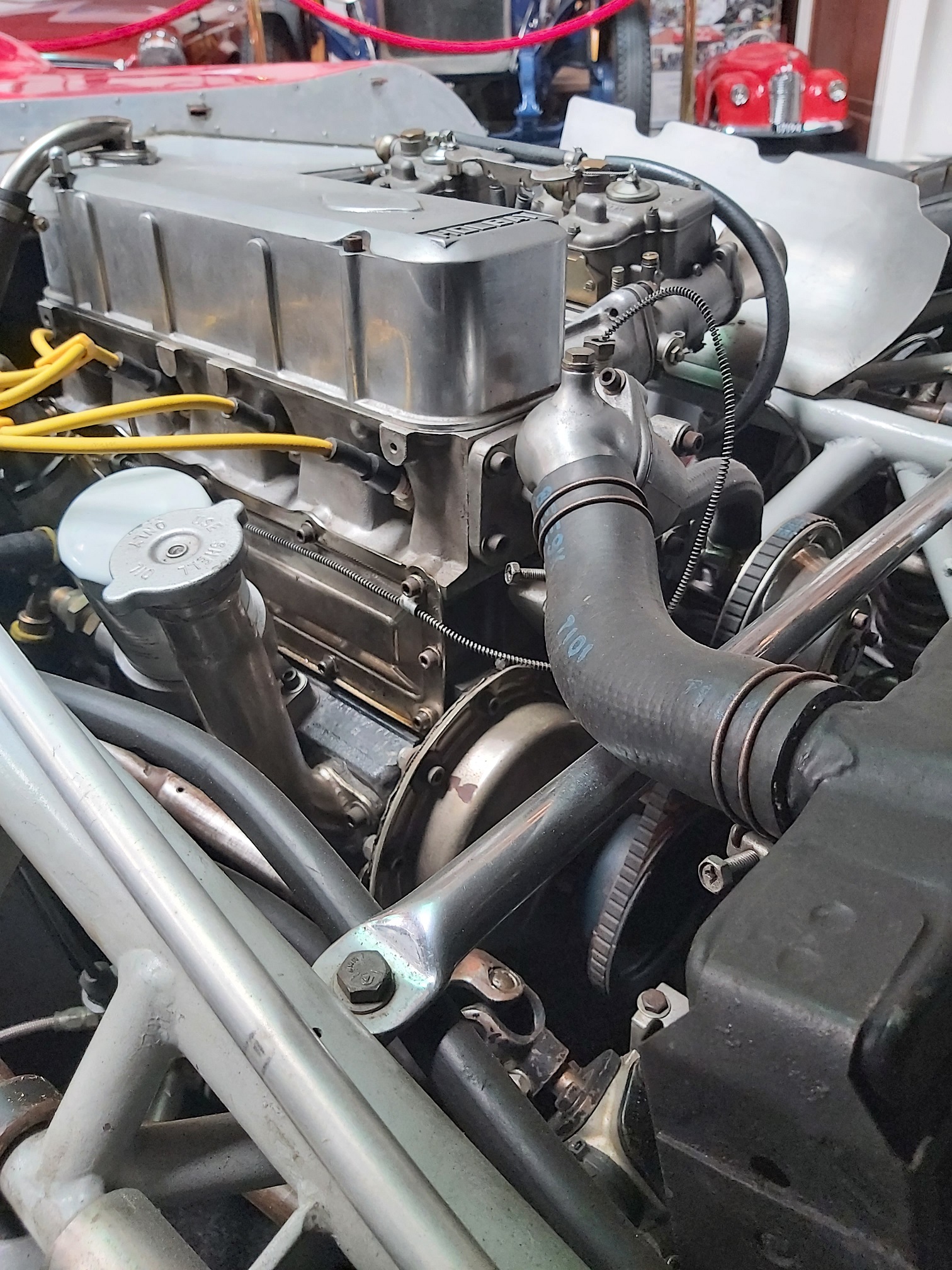
- Original engine: Canted Austin A70 four-cylinder, subsequently modified with dry-sump lubrication.
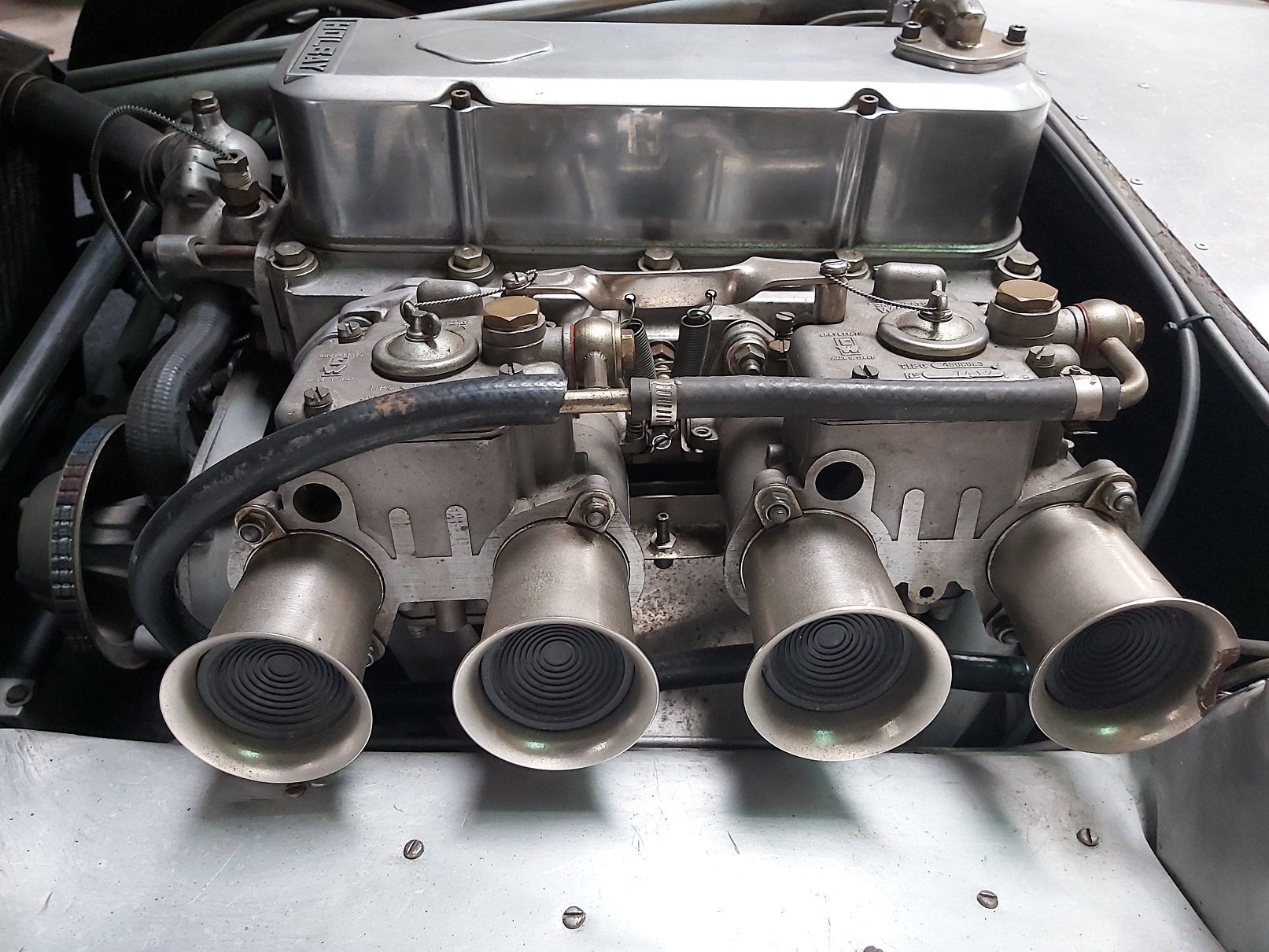
- Later engines: Four-cylinder Lycoming, followed by a 1592cc Humber 80 engine.
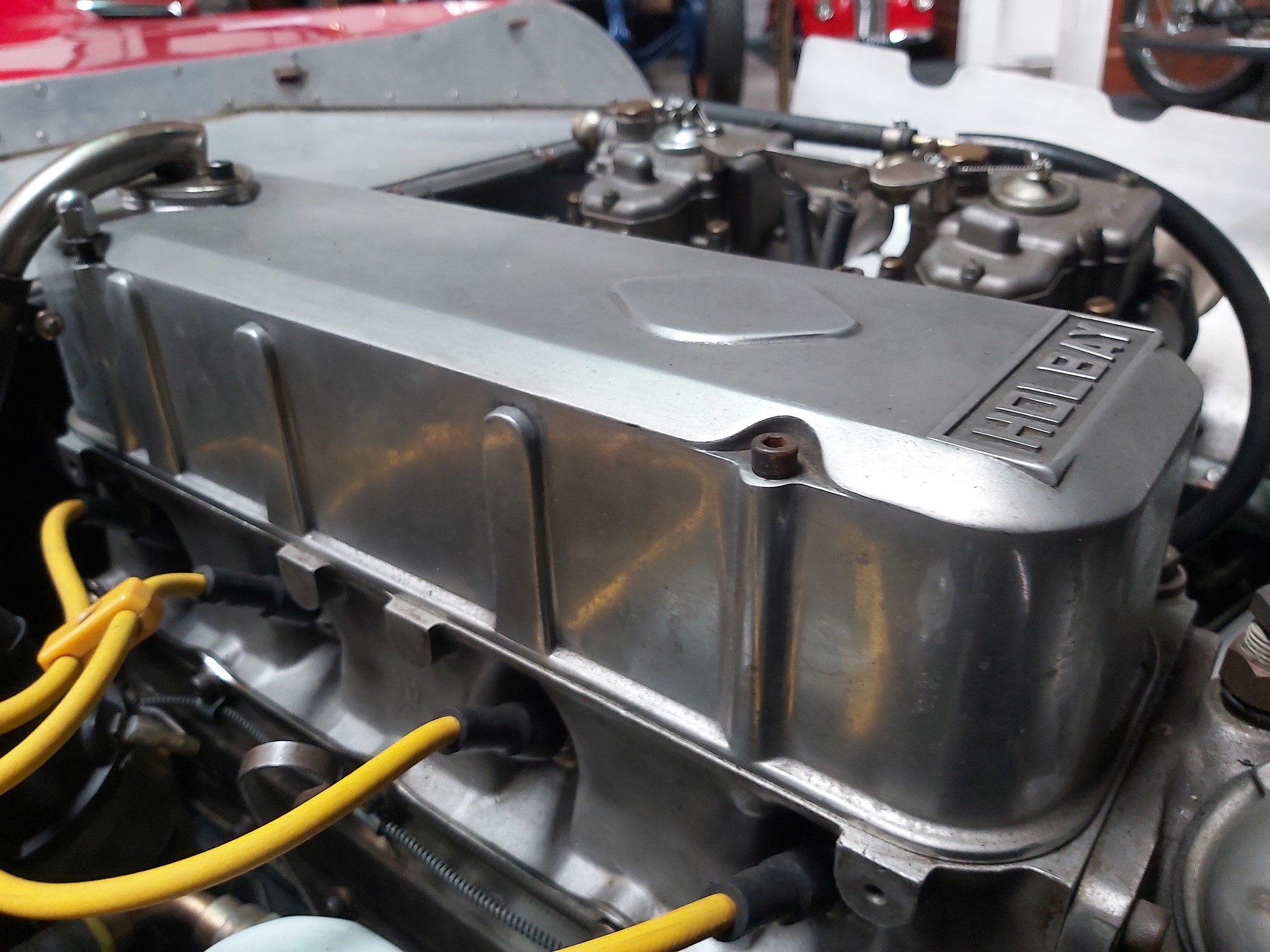
- Present engine: Hillman Hunter 1725cc four-cylinder.
- Original road registration: CT1218.
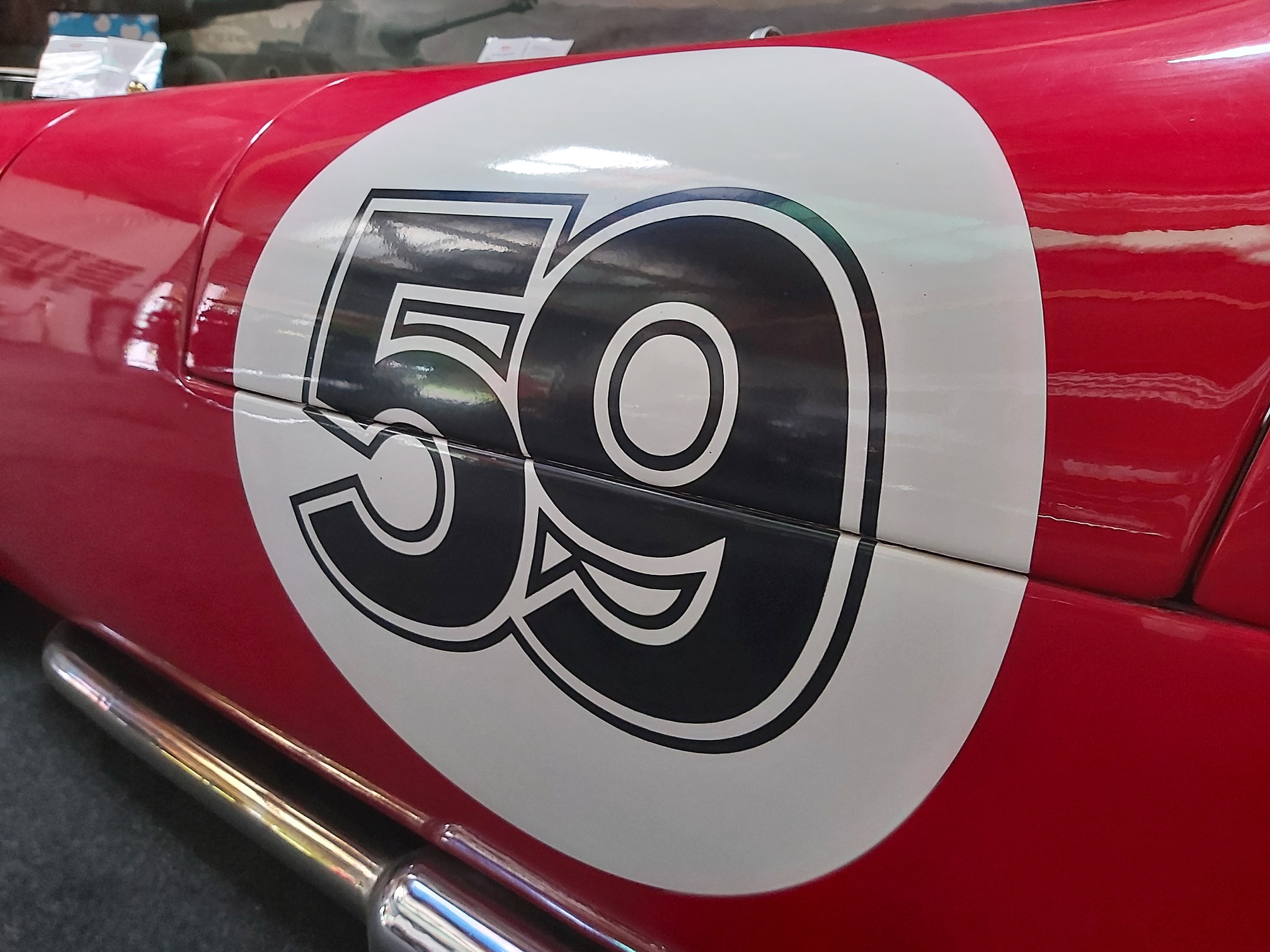
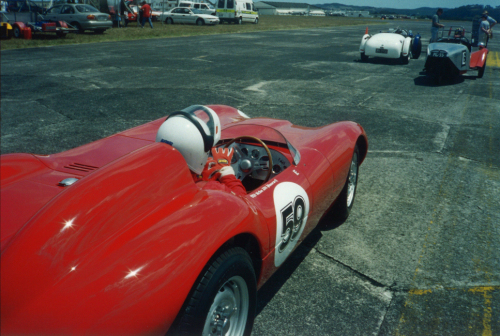
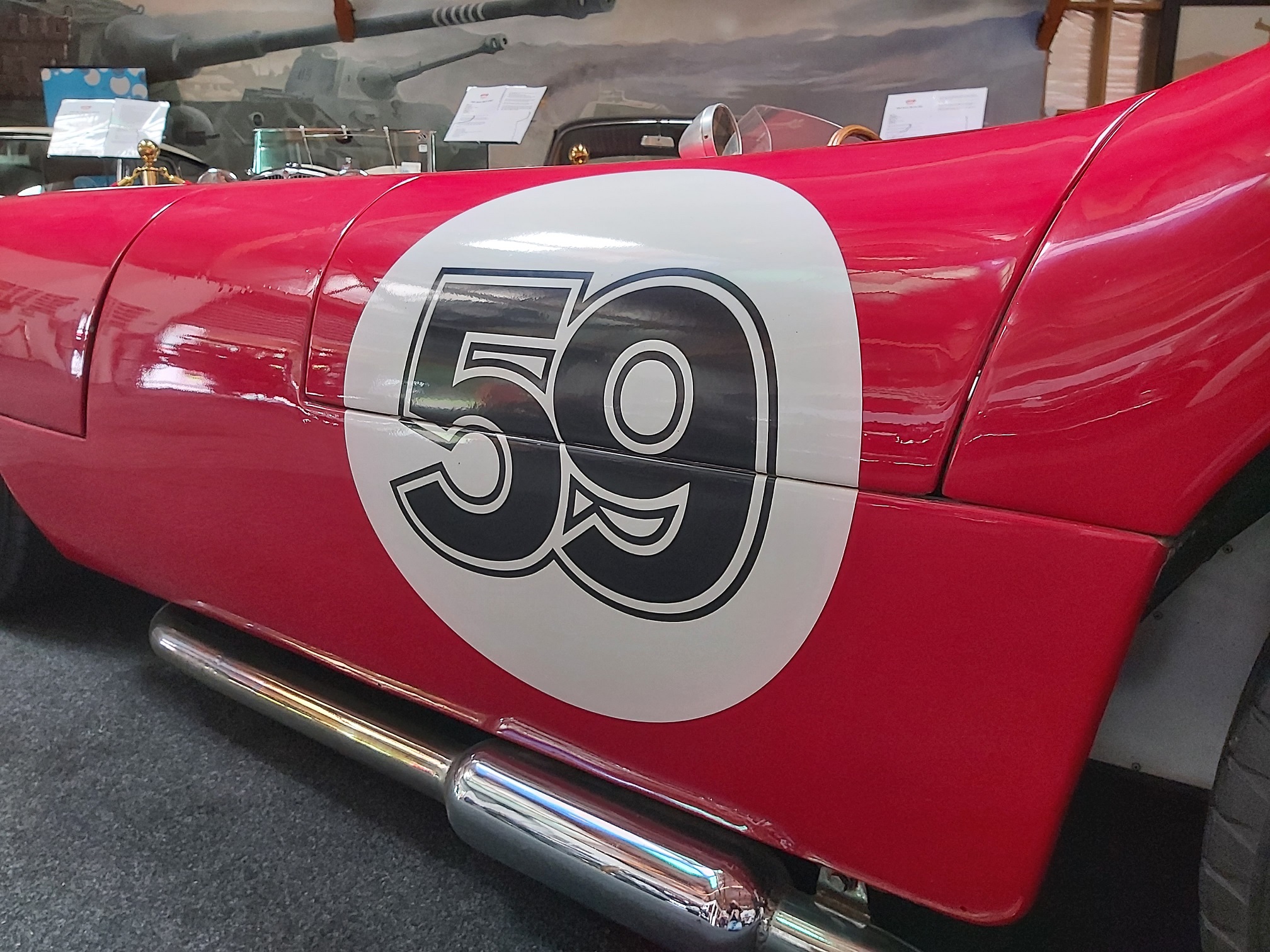
- Competition number: 59.
- Starting system: Starter motor subsequently fitted by a previous owner.
The Masararri’s mechanical development reflected the experimental nature of motorsport during this fascinating period. Initially powered by an Austin A70 engine, the car was modified to incorporate a dry-sump lubrication system to overcome oil supply difficulties experienced during competition. A more powerful four-cylinder Lycoming engine was subsequently installed, although its considerable torque reportedly proved excessive for the drivetrain. This was eventually replaced by a 1592cc Humber 80 unit.
Such experimentation was typical of the era, when talented New Zealand engineers and competitors frequently designed, modified and developed their own machinery with whatever components and resources were available. The Masararri is a particularly interesting surviving example of this innovative approach to racing car construction.
COMPETITION HISTORY & SIGNIFICANCE
As was common with many locally constructed competition cars of the period, the Masararri was originally road registered, carrying the New Zealand registration number CT1218. This allowed McRae to use the vehicle on public roads as well as compete in club racing, hill climbs, sprints and circuit events.
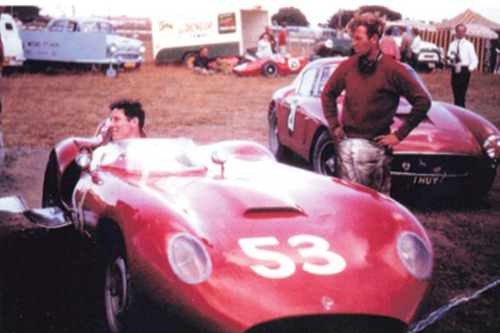
The car was campaigned extensively during McRae’s early competitive years, providing invaluable experience in both driving and mechanical development. Its most notable performance came at the 1963 Levin International meeting, where the Masararri famously defeated the Ferrari GT driven by English competitor Geoff Richardson.
This achievement was particularly significant given the considerable difference in resources and international prestige between the two machines. Here was a young New Zealand engineer competing successfully in a home-built racing car against established European machinery, demonstrating the remarkable talent and determination that would later take McRae to the international racing stage.
In many respects, the Masararri represents the very foundations of McRae’s subsequent achievements. Long before his Formula 5000 championships, international victories and Indianapolis appearance, this was the machine through which he developed his understanding of racing car design, engineering and competition.
OWNERSHIP HISTORY & RESTORATION
Following its sale by McRae in 1963, the Masararri passed through the hands of several New Zealand enthusiasts and collectors, including Lance Crawford, Dr Dave Bruton and J. M. Mete-Kingi, before eventually being acquired by renowned New Zealand racing personality Ron Roycroft.
In 1987, the car was traded to Auckland collector Ken White and subsequently sold to the previous owner in 1992.
Throughout its life, the Masararri has undergone several restorations and mechanical changes, reflecting both its competition history and the efforts of successive custodians to preserve this important automobile.
PRESENT CONDITION & PRESENTATION
- Presented in its distinctive historic racing configuration.
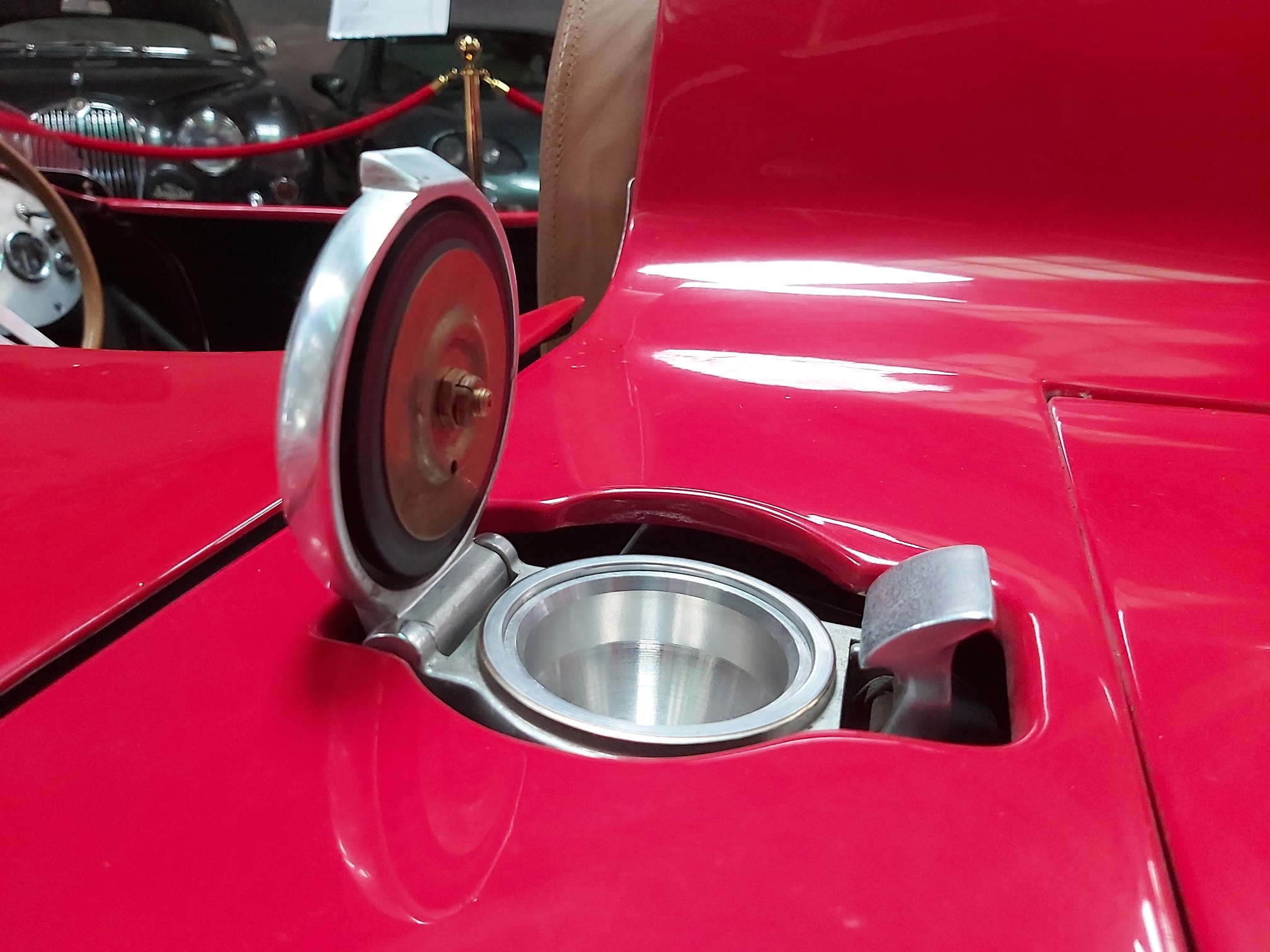
- Retains its striking hand-crafted aluminium coachwork.
- Displays competition number 59.
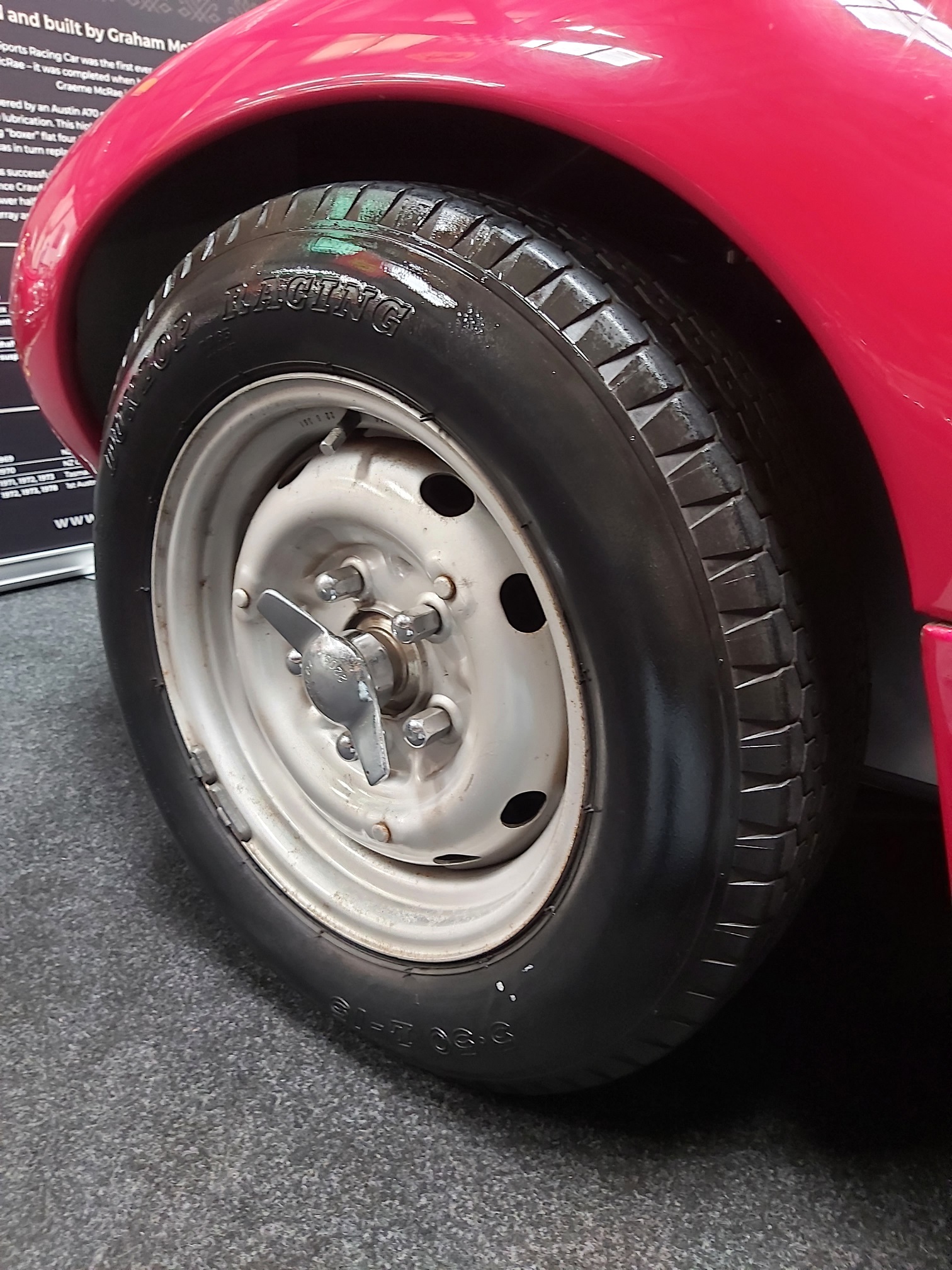
- Has undergone several restorations throughout its lifetime.
- Some paint deterioration and distress are visible on the aluminium body.
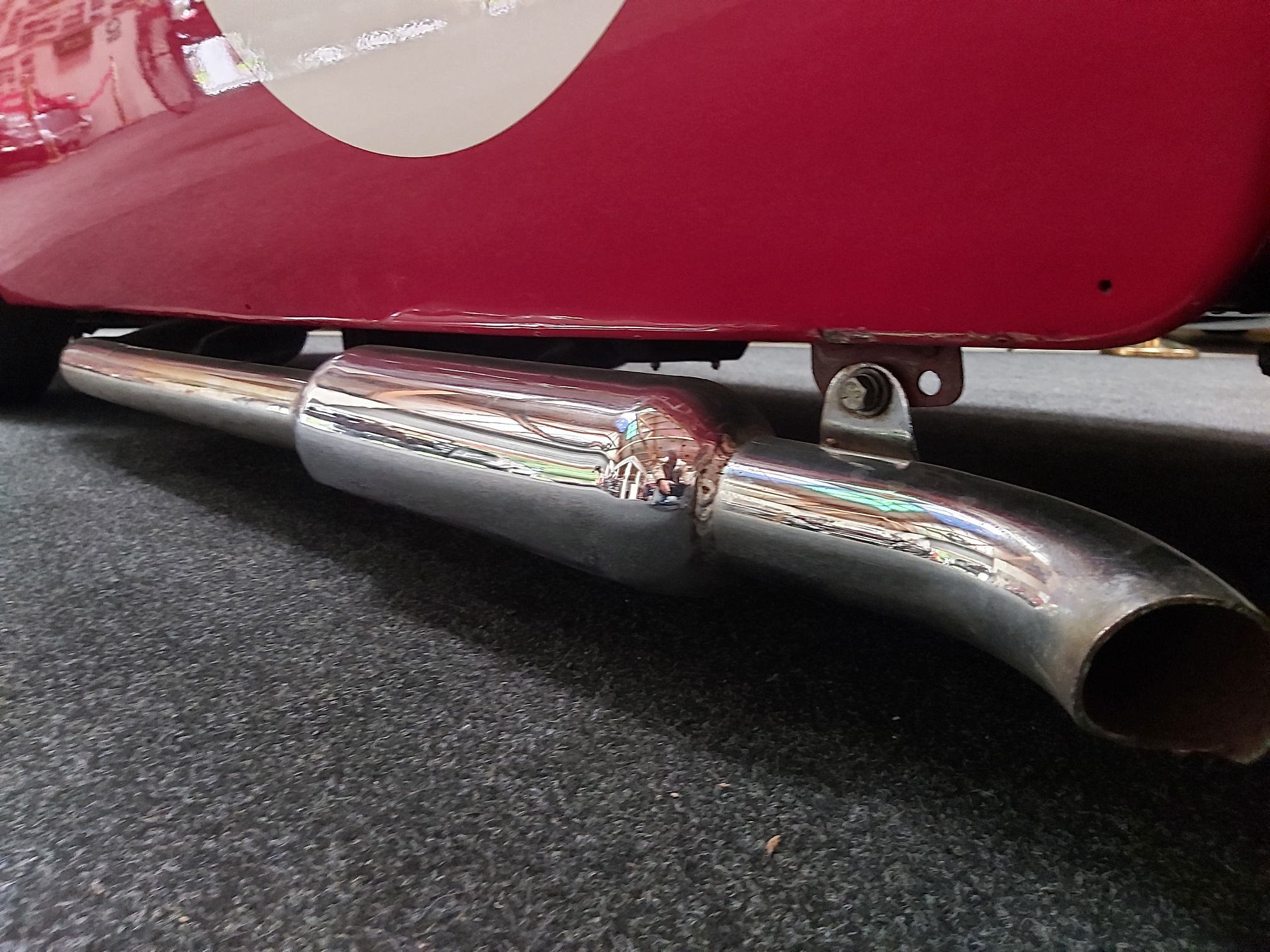
- Currently fitted with a Hillman Hunter 1725cc engine.
- A starter motor was added by a previous owner when push-starting became less practical.
- The vehicle is not currently running and will require mechanical recommissioning.
- Not currently road registered in New Zealand and being sold as is.
- Offered as a historic competition vehicle requiring further attention rather than a ready-to-race automobile.
While some recommissioning and cosmetic attention will be required, the Masararri remains an extraordinary survivor from the formative years of New Zealand’s racing history. Its importance lies not simply in its condition or mechanical specification, but in its origins, documented associations and the remarkable individual responsible for its creation.
SELECTED CAREER HIGHLIGHTS – GRAEME McRAE
The extraordinary achievements that followed McRae’s early involvement with the Masararri illustrate just how important this humble beginning was to his subsequent career.
- 1969: New Zealand 1.5 Litre Champion.
- 1969: Driver to Europe Scholarship winner.
- 1970: New Zealand Gold Star Formula 5000 Champion.
- 1970: Jim Clark Trophy winner.
- 1970: NZRDS Champion.
- 1971: Tasman Series Formula 5000 Champion.
- 1972: Tasman Series Formula 5000 Champion.
- 1972: Australian Grand Prix winner.
- 1972: US Continental Formula 5000 Champion.
- 1972: Third overall, European Formula 5000 Championship.
- 1973: Tasman Series Formula 5000 Champion.
- 1973: Australian Grand Prix winner.
- 1973: Indianapolis 500 Rookie of the Year.
- 1978: Australian Grand Prix winner.
- 1978: Australian Formula One Champion.
- Honours: Inducted into the New Zealand Motorsport Wall of Fame.
Graeme McRae passed away on 4 August 2021, leaving behind an extraordinary legacy of international racing success, engineering innovation and determination. His achievements deserve recognition alongside those of New Zealand’s most celebrated motorsport personalities, including Bruce McLaren, Denny Hulme and Chris Amon.
And remarkably, it all began with the Masararri.
HISTORICAL IMPORTANCE & COLLECTIBILITY
New Zealand has produced an extraordinary number of internationally successful racing drivers, engineers and constructors, yet many of the machines associated with their early careers have not received the recognition they deserve. The Masararri is a particularly important example of this heritage, representing the beginning of a career that would eventually take Graeme McRae to the highest levels of international motorsport.
Unlike a conventional classic or collector vehicle, the Masararri’s significance is directly connected to its creator and the achievements that followed. Its historical importance extends beyond its engineering and competition record to the broader story of New Zealand motorsport, when talented individuals working with limited resources were capable of building machinery that challenged established international competitors.
For serious collectors, historically significant racing cars of this nature occupy a specialised and highly individual segment of the market. Provenance, authenticity, documented competition history, originality and association with celebrated racing personalities are all important considerations. In this instance, the association with Graeme McRae gives the Masararri a significance that cannot be replicated by another sports racing car of similar age or specification.
Preserving such vehicles is equally important. As generations pass, the opportunity to document firsthand accounts, identify original components and retain important historical records becomes increasingly limited. Cars such as the Masararri deserve to be recognised not merely as collector assets, but as tangible reminders of New Zealand’s remarkable contribution to international motorsport.
MARKET VALUE & INVESTMENT POTENTIAL
Establishing an appropriate market value for a historically significant competition car such as the Masararri is no straightforward exercise. Unlike conventional collector vehicles, where sales of comparable models may provide useful market benchmarks, individually constructed historic racing cars are unique, with transactions occurring relatively infrequently.
Their value is influenced by a combination of historical importance, provenance, competition achievements, originality, mechanical condition, restoration history and the reputation of the individuals associated with them. In many respects, the market value of a car such as this sits at the intersection of history, passion, rarity and the level of interest among serious collectors at any particular time.
The Masararri possesses several characteristics that make it particularly interesting from a long-term collectibility perspective. It was designed and constructed by one of New Zealand’s most successful racing drivers, represents the beginning of his remarkable career, possesses a fascinating period competition history and survives as a tangible connection to the formative years of his engineering achievements.
Its potential appeal also extends beyond New Zealand, particularly to international collectors with an interest in Formula 5000, historic racing machinery and the careers of significant racing drivers and constructors. While future appreciation can never be guaranteed, historically important competition vehicles with strong provenance and a unique story can represent compelling long-term collector assets.
For the knowledgeable collector, the Masararri offers something considerably more meaningful than simply another historic racing car. It represents an opportunity to become the custodian of an irreplaceable piece of New Zealand motorsport history.
PRICE & EXPRESSIONS OF INTEREST
Pricing a legendary racing car of this nature requires careful consideration. Vehicles of this calibre are not commodities with readily established market values, and there are few genuinely comparable transactions upon which to base a definitive assessment.
We have a considered understanding of the vehicle’s historical significance and its potential position within the specialist collector market. However, we also recognise that its value will ultimately be determined by the level of interest from collectors who appreciate its importance.
Accordingly, we welcome genuine expressions of interest and sensible offers from prospective purchasers, whether in New Zealand or internationally. All serious proposals will receive fair consideration.
IMPORTANT SALE INFORMATION
PLEASE NOTE: This vehicle is offered for sale strictly on an “as is, where is” basis as a historic competition automobile.
- The vehicle is not currently running.
- Mechanical recommissioning will be required.
- It is not currently road registered in New Zealand.
- No current Warrant of Fitness or registration is provided.
- The vehicle is sold in its existing condition, with any restoration, recommissioning, certification, compliance or registration requirements being the responsibility of the purchaser.
- Prospective purchasers are encouraged to satisfy themselves regarding the vehicle’s condition, historical documentation and suitability for their intended use.
AN IRREPLACEABLE PIECE OF NEW ZEALAND MOTORSPORT HISTORY
There are historic racing cars, there are famous racing cars, and occasionally there are automobiles whose importance lies in the remarkable story of the person who created them. The Masararri belongs firmly in that latter category.
Built by a young Graeme McRae with ingenuity, determination and an extraordinary understanding of engineering, this was the machine that helped launch one of New Zealand’s most successful international motorsport careers. Its distinctive aluminium coachwork, unconventional mechanical construction and fascinating competition history embody the pioneering spirit that made New Zealand motorsport so remarkable during the 1960s.
For the discerning collector, museum or motorsport enthusiast, the opportunity to preserve and enjoy such an important automobile is something special. It deserves to be recognised, documented and appreciated as part of our national sporting heritage.
The Masararri is more than a racing car. It is where the Graeme McRae story began, and an important piece of New Zealand motorsport history that deserves to be preserved for generations to come.
Market Review
New Zealand has an extraordinary motorsport history, having produced some of the world’s most talented and respected racing drivers, engineers and innovators. From Bruce McLaren, Denny Hulme, Graeme McRae and Chris Amon to countless other competitors who achieved remarkable success both nationally and internationally, our contribution to motorsport is considerable, particularly for a country of our size. The historic racing cars associated with these individuals represent far more than old competition machinery. They are tangible reminders of New Zealand’s achievements, ingenuity and determination on the international stage, and an important part of our national motoring heritage that deserves to be recognised, celebrated and preserved for future generations.
From a collectibility and investment perspective, genuine historic racing cars occupy a specialised but increasingly significant position within the international collector vehicle market. Desirability is influenced by factors such as competition history, originality, provenance, mechanical specification, rarity and, perhaps most importantly, association with recognised drivers and significant racing events. A competition car with a documented New Zealand racing history, particularly one driven by a notable personality or associated with an important championship, can possess considerably greater historical and collector significance than an otherwise comparable vehicle without such provenance. While the market remains selective and values vary substantially, authentic historic competition cars with strong documentation and meaningful racing histories can attract serious interest from collectors, museums and motorsport enthusiasts, both locally and internationally.
Unfortunately, New Zealand has not always given sufficient recognition to the many outstanding drivers, mechanics, engineers, team owners and motorsport personalities who helped establish our remarkable racing heritage. While internationally celebrated names such as McLaren, Hulme, Mc Rae and Amon are reasonably well recognised, numerous other accomplished New Zealand competitors and their achievements risk being overlooked or forgotten. Many competed with limited financial resources, developed their own machinery and achieved extraordinary results through determination, innovation and sheer ability. Their stories deserve to be told, and the cars they raced deserve to be identified, documented and preserved. Without greater recognition and a coordinated effort to record this history, there is a genuine risk that important vehicles, personal collections, photographs, racing records and firsthand accounts will disappear as generations pass.
Preserving historic racing cars is therefore about considerably more than maintaining valuable collector vehicles. It is about protecting an important part of New Zealand’s sporting and cultural identity. Proper restoration, historical research, accurate documentation and responsible custodianship all contribute to safeguarding this heritage. Equally important is ensuring that these automobiles remain accessible through museums, historic racing events, exhibitions and public displays, allowing younger generations to appreciate the people, engineering and achievements behind them. Where practical, keeping these machines operational and participating in appropriate historic motorsport events adds another dimension to their preservation, allowing the sights, sounds and experiences of an earlier racing era to remain alive.
Looking ahead, there is a compelling case for New Zealand to place greater emphasis on recognising its historic motorsport personalities and preserving the vehicles associated with their achievements. Collectors, enthusiasts, clubs, museums, businesses and motorsport organisations all have a role to play in ensuring that significant racing cars and their histories are not lost, neglected or dispersed without proper documentation. Financial values and investment potential are important considerations, but they should never overshadow the historical significance of these machines. A historic racing car is not simply a collectible asset; it is a surviving piece of New Zealand’s motorsport history, often representing the ambitions, sacrifices and achievements of individuals who helped put this country on the world racing map. Their contributions deserve far greater recognition, and preserving the cars and stories associated with them is both a privilege and a responsibility.
Conditions of Sale
New Zealand Sales
Unless otherwise stated, vehicles sold for use in New Zealand will be supplied with a new Warrant of Fitness (WoF) and 12 months New Zealand registration at the time of sale.
Transport & Shipping
New Zealand transport and worldwide shipping can be arranged on the Buyer’s behalf and at the Buyer’s cost and risk. Any freight, shipping, insurance, customs charges, duties, taxes, import costs, certification or compliance costs are the responsibility of the Buyer unless otherwise agreed in writing.
Export Sales
For vehicles purchased for export, the Buyer is responsible for determining and satisfying all import, registration, certification, compliance, tax and regulatory requirements applicable in the destination country.
Viewing
All vehicle inspections and viewings are strictly by appointment only.
Applicable Law
All sales are subject to applicable New Zealand law. Nothing in these Conditions of Sale excludes or limits any statutory rights or obligations that cannot lawfully be excluded or limited.
Make an enquiry
For more information about this vehicle, please contact us Monday to Friday between 9:00am and 6:00pm (New Zealand Standard Time) on +64 (0) 3 310-6485. Alternatively, you may email us at [email protected] anytime, or contact us through the form below.
"*" indicates required fields
Disclaimer (Please Read)
The Purchaser is encouraged to personally fully inspect the vehicle and also to have the vehicle inspected, and fully assessed by an experienced, independent, specialist garage - before committing to purchase. While the Purchaser is entitled to rely on statements given by Waimak Group Ltd as being correct, where goods such as vehicles are concerned, with so many moving parts and rust being an issue with older vehicles; a Purchaser who chooses not to seek independent professional assistance when assessing the quality of what they propose to buy is considered as buying at their own risk, and if the vehicle then turns out to be of less than the represented quality, or not up to the Purchaser's expectation, or in the Purchaser opinion not fit for purpose; then the Purchaser is considered to have contributed to their own loss and should not expect any refunds or betterment from Waimak.
NOTIFICATION AS TO NATURE OF GOODS IN TERMS OF THE CONSUMER GUARANTEES ACT 1993
Waimak Group Ltd is a New Zealand registered company and accepts that the vehicle being sold must be of “acceptable quality” in terms of section 7 of the New Zealand Consumer Guarantees Act 1993 (the Act) having regard to “the nature of the goods”.
Waimak Group Ltd is not aware of any specific defects with the vehicle, however (a) such a vehicle being a classic vehicle may have mechanical breakdowns, electrical failures at inconvenient times and maintenance costs being part of and parcel of ownership of a classic vehicle; (b) reliability is a combination of the particular nature of the classic vehicle, how it is being driven, how it has been maintained, and to a certain extent luck; (c) because of the age of the vehicle, and its propensity to rust, it is likely that the vehicle would have been fully or partially restored, or at least repainted at some point in its life, maybe even more than once. Waimak Group Ltd does not know, and cannot give advice on how good any restoration work on the vehicle had been.
The Purchaser acknowledges that the vehicle is being sold as a classic car; that in terms of the Act and the nature of the goods, the vehicle is an old car, bike or boat, that may have visual and hidden faults, unlike a new motor vehicle.
The Purchaser is encouraged to personally fully inspect the vehicle and also to have the vehicle inspected, and fully assessed by an experienced, independent, specialist garage - before committing to purchase. While the Purchaser is entitled to rely on statements given by Waimak Group Ltd as being correct, where goods such as vehicles are concerned, with so many moving parts and rust being an issue with older vehicles; a Purchaser who chooses not to seek independent professional assistance when assessing the quality of what they propose to buy is considered as buying at their own risk, and if the vehicle then turns out to be of less than the represented quality, or not up to the Purchaser's expectation, or in the Purchaser opinion not fit for purpose; then the Purchaser is considered to have contributed to their own loss and should not expect any refunds or betterment from Waimak Group Ltd.
The Purchaser acknowledges that they have read and fully understand this notification and the nature of a car which is many years old.
We offer a wide range of services for our local and international clients, contact us to discuss your needs.
Contact us here